Moving to Vietnam
 ByStephen
SafetyWing
- Global coverage in 180+ countries
- Starts under $63 per month
- Buy before or while already abroad
What is Vietnam?
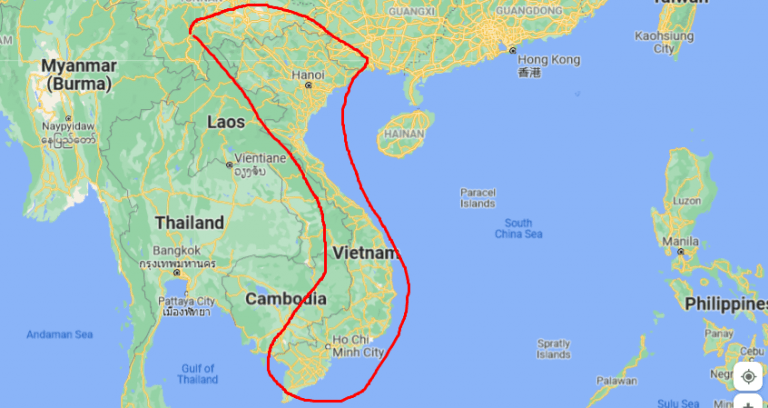
Vietnam lies in Southeast Asia, and is with its massive population of over a hundred million the 16th most populous country in the world.
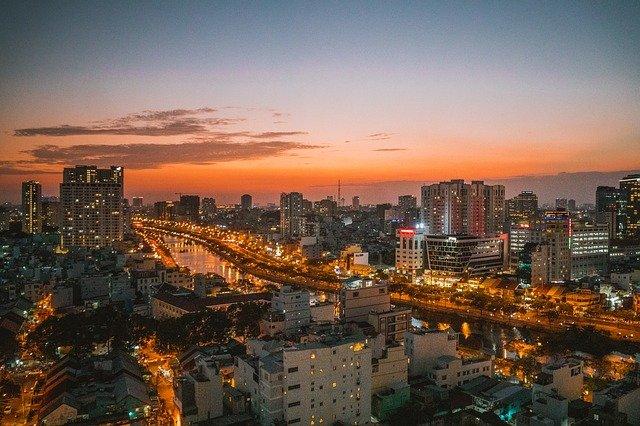
It shares borders with China, Laos and Cambodia. The capital Hanoi lies in the north of the country, while the largest city Ho Chi Minh City (Saigon) lies in the south.
Vietnam is probably most known for the prolonged and ill-fated war the United States waged there.
Vietnam economy
While Vietnam has been an economic shit show for many decades in the 20th century, by the end of the 1980’s economic and political reforms took place which turned Vietnam into a developing country with a bright future.
In fact, it is one of the fastest growing economies of the 21st century and is expected to continue on this trail for years to come.
If you want to take advantage of the rise of a local economic giant, moving to Vietnam is a good option.
Keep in mind that it is a Southeast-Asian developing country, so at the moment local infrastructure is still subpar, and petty crime and corruption are pretty common.
Vietnam politics
Currently, the country is a “unitary Marxist-Leninist one-party socialist republic” – a communist state, in other words.
However, this theoretical label shouldn’t be taken too seriously, the country has embraced capitalism rather significantly, which of course has led to its economic growth.
Internationally, Vietnam declares itself a “friend and partner of all countries in the international community, regardless of their political affiliation”.
Aww, that’s sweet – and it actually seems to be serious about this, and it even has cordial relations with the US now, who would have thought?
The geopolitical issues and territorial disputes with China have no doubt played a major part in this tentative alliance.
Vietnam geography and climate
Geographically speaking, Vietnam consists mostly of hills and dense tropical forests – mountains cover 40% of its land area.
Of course, there are also plenty of rivers, deltas, lakes, cave systems, coastal lowlands, and so on.
Some earthquakes occur sometimes, but they’re not nearly as devastating or as prevalent as further east in countries like Japan or the Philippines.
Despite Vietnam being a tropical country, its climate does tend to vary quite significantly depending on the region and the season.
Vietnam is officially recognized as one of the world’s most biodiverse nations, ranking 16th globally for its rich ecosystems.
If you visit here, you can see plenty of beautiful nature, both fauna and flora.
Vietnam is pretty comparable to Thailand and the Philippines in Southeast Asia, and Paraguay in Latin America, regarding the low cost of living and climate.
Requirements for moving to Vietnam
If you look at moving to Vietnam from a visa perspective, you definitely need to apply for a visa.
The Vietnam visa requirements are unfortunately pretty strict.
If you want to stay in Vietnam long-term as an independent worker, you will likely rely on visa runs.
Fortunately, Vietnam offers a 90-day e-visa (single or multiple entry) for all nationalities, meaning you only need to cross a border to renew your stay once every three months.
Getting residency without doing visa runs usually requires either setting up a local business/investment entity, securing local employment, or having a familial bond to a Vietnamese citizen.
Other than that, as is the case with every other nation you can move to if you want to escape the West, the only real requirement for moving to Vietnam is being self-employed with a location independent income.
If you can make money wherever and whenever you want, you are good to go and living in Vietnam becomes an option – provided you can deal with the visa situation.
What is the cost of living in Vietnam?
The cost of living in Vietnam is pretty low, as you can imagine if you’re at all aware of the realities of Southeast Asia.
Apart from Singapore, every country in this region offers a lower cost of living than the West, and if you want to live a good life, you can certainly do so here.
Based on real numbers and personal experience, you can certainly live decently in Vietnam on roughly $1,000 per month.
You won’t be living like a king, but if you increase that number to, say, $2,000 per month, you will be able to experience a comfortable lifestyle, and you won’t lack anything.
Vietnam’s not the cheapest country in the region, but it certainly isn’t expensive either by any means.
Living on a budget can easily be done, and you’d be living in a nice condo, with access to virtually anything you’d want.
Of course, the Vietnam cost of living varies strongly depending on your location. Ho Chi Minh City and central Hanoi are at the higher end of that range, while smaller cities like Da Nang or Nha Trang offer a higher-end condo life at the lower end (think $1,000 – $1,200).
Benefits of living in Vietnam
Rising nation
Vietnam is on the rise, and has been for several decades. This is one of the strongest growing economies in the world, and by living (and possibly investing) there, you can enjoy the rise of a local juggernaut up close
Beautiful girls
Beauty is in the eye of the beholder, but there are some absolutely stunning girls to be found in Vietnam
Decent climate
Vietnam doesn’t have the best climate in the world (too humid), but it certainly is pretty sunny and warm. If you’re tired of being cold and miserable in your Western nation, this would certainly be an improvement. While Central and Southern Vietnam (Ho Chi Minh City, Da Nang) remain warm and tropical year-round, Northern Vietnam (Hanoi, Sapa) experiences four distinct seasons. Winters in the north get cold and damp, with temperatures dropping to 10°C–15°C (50°F–59°F) or lower in high-altitude mountain areas.
Reasonably safe
Vietnam certainly has problems with petty crime and corruption, but “big” crimes like murders or terrorism are very uncommon. In addition, it doesn't really have an major enemies or international disputes (aside from some territorial claims with China - but which Asian country doesn't?)
Cost of living in Vietnam is low
Vietnam is a cheap Southeast-Asian country, so your dollar or euro will go very far. With just an average salary, you can live a very good life here
Beautiful nature
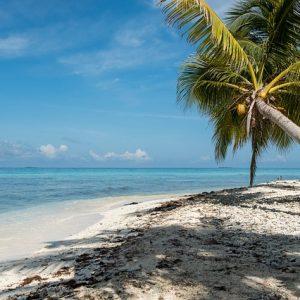
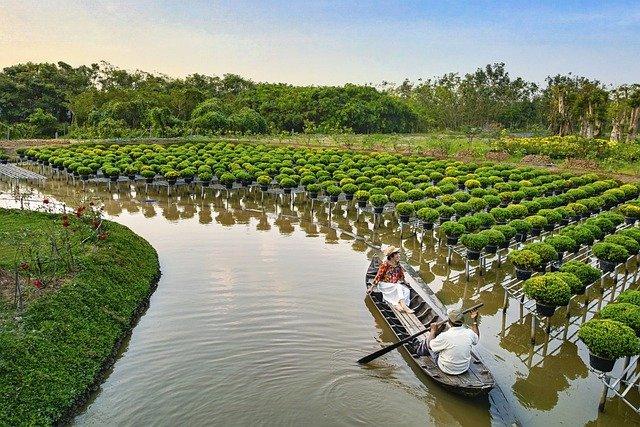
Vietnam is often associated with the thick, dangerous jungles you can see in movies about the Vietnam war (which were often actually shot in the Philippines), but this country has so much more to offer. Great beaches, mountains, rice-fields, ancient heritage sites, and so on

Downsides of living in Vietnam
Annoying and lacking visa process
Apart from the need to get a visa before you travel there, you can also only extend this a few times at best. Visa-hopping will be needed if you want to stay there long-term, unless you marry a Vietnamese girl (which I would advise against, marriage in general is a bad idea). Fortunately, , marriage is not the only path to staying long-term without visa runs. Foreigners can legally secure a Temporary Residence Card (TRC) for up to 5 years by setting up a business/investing or through local company sponsorship.
Low English proficiency
The average Vietnamese citizen does not speak English well, so you’ll often have to get by with sign-language, or just use your phone to translate. However, Vietnam is a rising nation, and more and more emphasis is being placed on education, so in the future this factor will likely improve
Corruption and petty crime
Many layers of government are corrupt, and this could affect you in the form of police offers expecting bribes, and taking advantage of you as a foreigner. Petty crime also occurs, so beware of pick-pockets and other low-life scumbags, such as taxi drivers taking unnecessarily long routes. This has improved greatly the past few years, however! While taxi scams used to be widespread, the massive adoption of ride-hailing apps like Grab and Gojek has largely eliminated the risk of drivers taking long routes or overcharging, provided tourists avoid unmetered street taxis. Most of these issues can be averted by, basically, not being an idiot. Stay humble, don’t flash your cash, phone or other valuables around, and avoid antagonizing or getting the attention of the local authorities
Developing country
Vietnam is in full development, which is certainly a good thing, but this also means that there are plenty of under-developed aspects here, such as the aforementioned corruption, poor infrastructure, and low level of English proficiency
Humid
Vietnam has a decent climate, but not a great one. It’s way too humid, and combined with a high average temperature this means you’ll be sweating often if you’re out during the day. This gets even worse if you live in the middle of a city like Saigon
Moving to Vietnam - By the Numbers
Climate: 7.1/10
| Hours of sunshine (7/10) | Temperature (9.5/10) | Rainy days (6/10) | Humidity (6/10) |
|---|---|---|---|
26 C – 79 F |
13 |
72% |
Level of English: 6/10
When first writing this article, Vietnam only scored a Low Proficiency, but has since worked its way up.
Another sign this is a rising nation, and getting better every year.
Cost of Living: 9/10
| Minimum Annual Wage | Average monthly cost single person |
|---|---|
$1,437 |
Taxes on international income: 7/10
Progressive tax system, up to 35% if you are a resident.
If you stay more than 182 days per year in Vietnam, you are considered a tax resident and will get taxed on your worldwide income.
If you are not a tax-resident, you "only" get taxed 20% on your Vietnam-sourced employment income (which you probably will not, and should not, have).
This is a better situation than in Western countries, but is certainly not ideal.
Economic growth: 9/10
Average GDP growth over the last 10 years: 6.5%
Vietnam is a rising power in this region, and many consider it to be one of the most likely nations to be a massive success story in the years to come.
It already is, but it has the potential for much more, especially as it ditches its communist past and new, open-minded people gain power.
A nation to keep an eye on, for sure.
Safety: 8.5/10
While Vietnam definitely has some dangerous areas (which country doesn’t?) in general it’s pretty safe to live here as a foreigner. Just beware of petty crime and corruption.
Visa: 4.3/10
Visa (5/10)
You need one to enter the country, with the possibility for a visa exemption or e-Visa, but only for a month, or a few months at most. After that, you can sometimes renew it, but it costs some money. Unfortunately, visa hopping is almost always the way to go here, which isn't ideal at all
Permanent Residence (5/10)
Getting permanent residency is possible, but you need some familial bond to a Vietnamese citizen –which is unlikely to be the case
Citizenship (3/10)
Citizenship is also possible, after being a resident for a few years , but you need to renounce your existing citizenship – so in my opinion this is a big no-no
How is life for expats in Vietnam?
Life for expats in Vietnam is reasonably good to great or even excellent.
Even with a moderate income, you can live a relaxed, sunny and usually stress-free life here – whether you’re an American moving to Vietnam, a Canadian, a European or whatever.
Vietnamese girls are often pretty and interested in foreigners, so that’s certainly a plus.
The visa-situation is far from ideal, but definitely not unmanageable.
It’s quite humid, but not as much as the Philippines.
At least it’s sunny and warm nearly every day.
For me personally, the moderate proficiency in English and the visa-situation put this country lower on my “I want to live there” list, but the fact that Vietnam is a booming economy with currently cheap options to invest should alert you to the possibilities.
(Just don’t expect to find many lucrative jobs in Vietnam for expats!)
Investing in real estate here can net you up to 6.5% of rental yield, with real estate prices increasing every year.
In short, I would use Vietnam as one of your Bases, to put an asset in.
And then visit it every so often, to enjoy the fruits this country has to offer.
I would advise against living here full-time, because then you’d also have to pay taxes, and you’d be faced with many of the downsides of the country that you can avoid if you only use it as one of your Bases.
Of course, if you are retired … go crazy, enjoy everything this beautiful country has to offer.
SafetyWing
- Global coverage in 180+ countries
- Starts under $63 per month
- Buy before or while already abroad