
Moving to Uruguay
 ByStephen
SafetyWing
- Global coverage in 180+ countries
- Starts under $63 per month
- Buy before or while already abroad
What is Uruguay?
Uruguay is one of my favorite countries in the world, and one of the top choices to move to when you want to escape the West.
There are plenty of factors to contribute to this evaluation, such as its relatively high levels of development, safety, mild climate, social freedoms, and so on.
This tiny country has a population of around 3.5 million, of which roughly half lives in the capital Montevideo.
Uruguay geography, climate and history
Geographically speaking, Uruguay consists mostly of rolling plains and low hill ranges, plenty of rivers and deltas, in addition to coastal lowlands.
It has a relatively mild and uniform climate, with high humidity and strong winds.
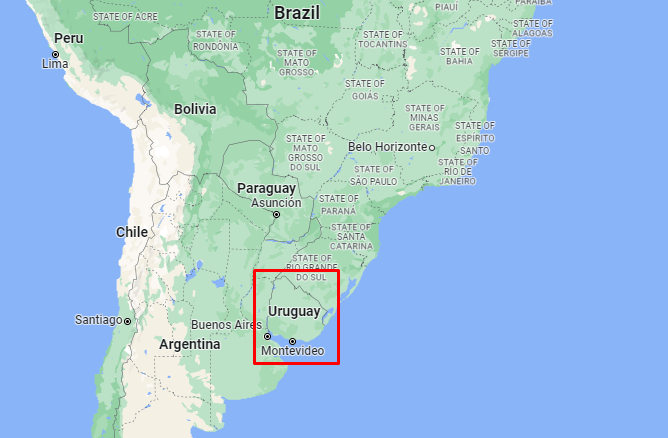
Uruguay borders Brazil and Argentina and has a long coastline along the Atlantic Ocean and Río de la Plata.
Uruguay safety
Uruguay has exceptionally peaceful relations with its neighbors, and its geopolitical position is indeed relatively favorable.
The 2025 Global Peace Index ranked Uruguay 48th out of 163 countries and second in Latin America, behind Argentina.
As is the case with every other Latin American country, Uruguay does have a history marked with European influence, a turbulent 20th century full of coups, military interventions, and so on.
The dictatorship ended in 1985, when the military handed power back to an elected civilian government.
Today, Uruguay is a democratic constitutional republic. It is a relatively small, high-income economy by World Bank classification.
What’s more, Uruguay is (probably by far) the top country in Latin America based on factors such as corruption, peace, freedom of speech, prosperity and democracy.
Uruguay scored 73/100 and ranked 17th globally in the 2025 Corruption Perceptions Index, making it the highest-ranked country in Latin America and the Caribbean.
It is also one of the safest and most politically stable countries in Latin America, and one of the most socially progressive one, with cannabis, abortion and gay marriage being legal (Argentina is probably the other main contender for the top spot here).
However, keep in mind that crime is still a real issue. The IMF specifically says insecurity has become a major concern and that the homicide rate has risen over the past decade.
It remains one of the region’s safer and more politically stable countries, although crime and insecurity have become increasingly important domestic concerns.
Uruguay economy
The downside is that Uruguay is also one of the more expensive countries in Latin America, particularly by regional standards.
One final note: Argentina and Brazil are two of Uruguay’s most important regional trading partners.
However, China is also extremely important to Uruguay’s trade, particularly exports.
For example, Uruguay’s 2024 soybean exports alone included about $349 million going directly to China, versus about $47 million to Argentina and $4 million to Brazil.
And finally, Uruguay also a founding member of Mercosur, and as such, it offers its citizens the advantages of the bloc’s regional mobility arrangements, including simplified travel and residence rights in other member states.
When you want to escape the West, the importance of these factors cannot be underestimated.
Requirements for relocating to Uruguay
Relocating to Uruguay is, all things considered, relatively straightforward compared with many countries – depending on your situation.
Uruguay visa requirements are generally very relaxed.
To start off with, most Western passport holders can enter Uruguay without obtaining a visa in advance and can generally stay for up to 90 days.
This can generally be extended once, up to 180 days, which is an okay system. Not great by any means (like in the Philippines), but definitely a cut above many other countries.
Uruguay’s Constitution provides a route to legal citizenship after:
- 3 years of habitual residence if you have a family established in Uruguay, and
- 5 years if you don’t have a family established there.
- additional requirements concerning good conduct, means of life/occupation/property/profession, etc.
Pretty similar to Paraguay, in fact – which, you might remember, is one of the top countries in the world based on my 7 factors, being tied only with the Dominican Republic.
This can come from any source, but I would strongly recommend you do not rely on your Western pension for this, mainly because a pension is unreliable as hell when it comes from a collapsing country.
Because Uruguay has relatively high living standards by Latin American standards, it is also relatively expensive by regional standards.
$2,000 per month can provide a reasonable income for a single person in Uruguay, particularly outside the most expensive parts of Montevideo, although your actual budget will depend heavily on housing and lifestyle.
The good news is that most people can have a location independent income of this size.
It’s not that hard to get, for example through freelancing, selling information, blogging, and so forth.
Apart from having a sufficient international income, I would strongly suggest you learn Spanish.
This isn’t hard to do, and it will greatly increase your quality of life.
What is the Uruguay cost of living?
The Uruguay cost of living is lower than in most Western nations, but higher than in most South American countries.
In fact, the 2026 Numbeo country index puts Uruguay at 55.6, making it the most expensive country in South America in that dataset. Argentina is 41.3, Chile 39.0, Brazil 30.1 and Paraguay 28.5.
As of July 1, 2026, Uruguay’s national minimum wage is UYU 25,383 per month, about $630. It was UYU 24,572 from January through June.
This is what you’ll need at minimum if you want to live a poor life somewhere in a third tier city.
As a single person living a decent life in a city (probably Montevideo) with most modern comforts (but not a lot of luxury), expect to spend around $900 per month, plus about $600 in rent.
If you want to have a bit more comfort, your Uruguay cost of living would be around $2,000 per month.
This number puts it above the “highest” tier of low-cost-of-living-nations such as Vietnam, Paraguay, the Philippines and so on, but below locations such as Singapore and Dubai.
All in all, in my opinion Uruguay is more than worth its slightly higher cost of living.
Do you have to pay taxes on international income in Uruguay?
Unfortunately, Uruguay has dropped significantly in value since I first wrote this article, and that’s because you now have to pay taxes on international income – in many cases.
Let me explain.
Uruguay is (or, I guess, was) often described as having a territorial tax system, but this does not mean that everything you earn from abroad is automatically tax-free.
If you become a Uruguayan tax resident, the tax treatment depends on what type of income you earn and where the underlying activity actually takes place.
This is particularly important for remote workers:
- If you live in Uruguay and perform your work physically from Uruguay for a foreign employer or foreign clients, the fact that the money comes from abroad does not by itself make the income tax-free.
- Income from work performed in Uruguay can be subject to Uruguay’s personal income tax (IRPF), with progressive rates ranging from 10% to 36%.
The rules are unfortunately also changing for investment income.
- Since January 2026, Uruguay has expanded IRPF to cover additional categories of foreign-source passive income and capital gains for tax residents.
- However, new tax residents can potentially elect for an 11-year tax holiday on qualifying foreign-source passive investment income and capital gains, subject to the applicable conditions.
So if you are planning to move to Uruguay while earning 100% of your income internationally, don’t assume anymore that your income will be tax-free.
Remote employment, freelancing, business income and passive investment income can all be treated differently.
Uruguay can still be very attractive from a tax perspective, but it’s dropped off my list of countries to live in.
And as such, I’ve now fully shifted my focus to Paraguay, which still keeps its 0% taxes on foreign income (for now…).
Benefits of moving to Uruguay
-
Socially advanced country
Uruguay is one of the most socially liberal countries in Latin America. Cannabis is legally regulated, same-sex marriage has been legal since 2013, and abortion is permitted under Uruguay's legal framework. The country also has strong protections for freedom of expression, political rights and civil liberties: Freedom House rates Uruguay 97/100 and “Free” in its 2026 assessment. Uruguay also ranks relatively highly for economic freedom, placing 32nd globally in the 2026 Heritage Foundation index.
-
Mild climate
Uruguay isn’t very hot or cold. It lies in between, and it almost never gets too hot, and it never gets too cold. There aren’t that many rainy days (although plenty of fog and humidity), and a great amount of sunshine
-
Spanish
Being a Latin American country, Spanish is the official language in Uruguay. This is great news, because Spanish is easy to learn AND you can use for almost all of Latin America
-
Member of Mercosur
Uruguay is a founding member of Mercosur, which means that once you attain residence or citizenship, you can more easily travel to the other member states AND you get simplified access to temporary and permanent residence in other member states.. Freedom of travel is very important when you escape the West, so this factor is huge
-
Safe
Uruguay is a pretty safe country. In the 2026 Global Peace Index, Uruguay ranked 43rd out of 163 countries, the highest-ranked country in South America. Fun fact: France ranks 99 and the United States 134, making them SIGNIFICANTLY less peaceful than Uruguay.
-
Legal cannabis
Cannabis is legal here since 2013, the first country in the modern era to do so. You can grow it, buy it at pharmacies, sell it, smoke it – if you are a resident or a citizen. The government does control the price, quality and maximum volume
-
Great visa policy
Uruguay visa requirements are pretty relaxed. It has a relatively straightforward entry regime for many nationalities. Many Western passport holders can enter without obtaining a visa in advance, for 90 days, which can generally be extended for another 90 days. For expats who actually want to relocate, Uruguay also has established temporary and permanent residence procedures. Permanent residence requires sufficient means of support, with the evidence depending on your source of income.

Downsides of living in Uruguay
-
Too humid
While the temperature of this country is rather mild, the humidity is high, which can become a nuisance in hot summer days
-
Rather poor English proficiency
Uruguay scores a Low Proficiency on the international English test, which can be alleviated by the fact that you can just learn Spanish
-
Relatively high cost of living
Uruguay is one of the most expensive countries in Latin America. It’s still cheap compared to big Western cities, and with a budget of $1,500 to $2,000 you’d be able to live a good life
-
Taxes on international income
While this used to be a benefit, recent changes have turned it into a downside. As of 2026, income from work performed while you’re in Uruguay can be subject to tax rates ranging from 10% to 36%.
Living in Uruguay - By the numbers
Climate: 7.8/10
| Hours of sunshine (9/10) | Temperature (7.5/10) | Rainy days (10/10) | Humidity (6/10) |
|---|---|---|---|
|
21 C – 70 F |
8 |
75% |
Level of English: 4/10
Cost of Living: 7/10
| Minimum Annual Wage | Average monthly cost single person |
|---|---|
|
$6,103 |
Taxes on international income: 3/10
International income from work performed in Uruguay can be subject to tax rates ranging from 10% to 36%.
Since January 2026, Uruguay has expanded this to cover additional categories of foreign-source passive income and capital gains for tax residents.
Economic growth: 4/10
Average GDP growth over the last 10 years: 1.3%
Safety: 7.8/10
| Global Terrorism Index (10/10) | Intentional homicide rate (5/10) | Rape rate (9/10) |
|---|---|---|
|
9.8 |
Visa: 7.8/10
-
Visa (8/10)
Westerners can usually enter without needing to get a visa, which is valid for 90 days, but only extendable once to 180 days in total
-
Permanent Residence (8/10)
Possible, but you need to prove your income and comply with the usual requirements
-
Citizenship (7/10)
After 3 to 5 years of habitual residence you can apply for a passport, provided you meet a few more requirements (Spanish is a must etc.).

Is moving to Uruguay a good idea?
Uruguay is a decent place to live. It used to be amazing when I first wrote the article, but has unfortunately changed a bit for the worse.
That being said, South America has plenty of attractive options for Westerners to move to (with Paraguay being the best choice), and Uruguay is still a decent contender.
Uruguay does have beautiful parks, beaches and other sorts of natural resources.
It’s peaceful, safe, has a relatively easy visa/residence/citizenship process and is doing okay economically (but not great …. 1.4% GDP growth isn’t awesome).
Uruguay is also one of the most socially advanced countries in Latin America, so if you’re into personal freedom, this country definitely warrants a closer look.
The cost of living is higher than in, say, Thailand, the Philippines or Vietnam, and your foreign income unfortunately gets taxed now, while it wasn’t a few years ago.
This is the main reason I’ve reconsidered all my plans of making it one of my Bases, and am focusing on Paraguay instead.
However, if you don’t mind (to be fair) pretty reasonable taxes, then Uruguay can absolutely be a great place for you.







I think Uruguay is a good banking flag and potentially a great retirement flag for wealthier expats.
It seems like a great country in general, but indeed slightly more expensive than the surrounding options.