🪙Assets Abroad: Cryptocurrency: A Guide to Stateless Assets for the Global Citizen
 ByStephen
Freedom24
- Access to 1,000,000+ global assets
- Up to 8% yield on uninvested cash
- Fully licensed and regulated
Having assets abroad is a vital part for any citizen of the world – you need to protect yourself from governments and other entities which can lay a claim on your wealth.
If you follow a Flags-lifestyle, where your residence, source of income, banking, passport and other factors are spread across the world, you’ll definitely also want to include assets in that list.
One major asset you can invest in across the world is real estate, and that’s something I’m very much a fan of, especially in rising nations such as the Philippines, Vietnam and Paraguay.
Today I want to talk about a “stateless” asset: cryptocurrency.
Stateless because it doesn’t belong to any nation – real estate in Vietnam belongs to Vietnam, cryptocurrency in Vietnam belongs to whoever has the keys.
It’s fully digital, and this caries a lot of benefits – you can easily access it from wherever you are, you can send it fast and rather cheap to other people all over the world, and so on.
Cryptocurrency is also a very volatile asset – it can rise or decline in price very significantly over a short period of time.
This makes it a speculation, not a tried and tested reliable investment.
What is cryptocurrency?
Cryptocurrency is a digital (or virtual) form of currency/ secured by cryptography, which makes it nearly impossible to tamper with.
That’s because most cryptocurrency coins (Bitcoin and altcoins) exist on some kind of decentralized network, based on a new kind of technology called blockchain.
Blockchain technology is quite complicated when you go into detail, but simply put it is a digital book that keeps all the data of transactions of that cryptocurrency.
And the great thing about this is that this digital book is distributed on a large network of independent computers.
Such a decentralized form of a network is truly revolutionary and it will greatly influence our technological future.
One of the greatest features of cryptocurrencies is that they are not issued by any government or any central authority, making them – in theory – immune to government interference or manipulation.
In practice, of course, this is different, and a few governments have already put bans on cryptocurrencies, precisely because they are so non-manipulable.
Types of cryptocurrency
There are thousands of different types of cryptocurrency, and Bitcoin is the first and most famous of them, with an interesting history and evolution.
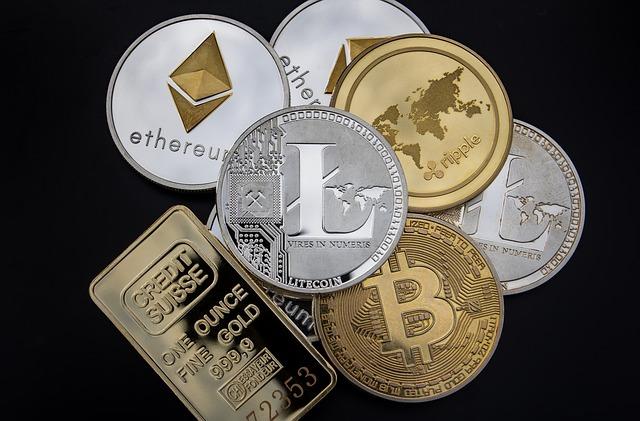
Other big names are Tether, LiteCoin, Ripple and Ethereum.
All coins that are not Bitcoin are called altcoins.
It is already possible to pay with cryptocurrency in certain stores (online) and more and more traders and online businesses are switching to this form of payment.
After all, there are few to no taxes, your transfer is instant, and it’s very secure.
International payments are no problem at all, and that is often one of the greatest assets of crypto coins.
Compare that to the slow bank payment system, where you often have to pay extra when you make an international transfer, and you can see why cryptocurrency is starting to look very interesting.
How can you earn money with cryptocurrency?
Cryptocurrency, such as Bitcoin, Ethereum, and the thousands of altcoins currently out there, is a commodity.
That means that the most common, best-known and simplest way to make money with it comes down to: buy low, sell high.
You probably already knew this, but if you had bought a few hundred dollars worth of Bitcoin a decade ago, you could sell it today and be a multi-millionaire.
Between 2010 and 2012, the price of 1 Bitcoin fluctuated between a few cents to about $10.
In December 2017, it peaked at around $20,000, before collapsing the following year and being “only” worth around $3,000.
In 2020, the price fluctuated between $4,500 and $16,500. So you could still double/triple your money if you bought low and sold high.
And of course, near the end of 2021 and the start of 2022, it shot up to a staggering $60,000, before dropping back down to around $20,000 – 30,000, a price it seems to be hovering around currently.
I’m pretty confident that at some point the crypto market will skyrocket (again), perhaps even more than it did in the peaks of 2017 and 2021, so it’s a good idea to do SOMETHING in this sector.
What brings me to this conclusion is that many cryptocurrencies (Bitcoin is prominent in that group) are a finite commodity, a so-called controlled supply.
Until 2140 Bitcoins can be mined, but after that it’s done.
The algorithm simply won’t allow more to enter the market.
Compare this to the current financial system with unlimited printing of money.
So if you combine a promising alternative payment method with a finite number of those units, you get scarcity.
Most people today are not into cryptocurrency at all, but this number is rising and rising every year, as is the demand for crypto.
Conclusion: Scarcity + increasing demand = huge profit potential.
But for the time being it is still more of a risk than investing in real estate or in the stock market, so keep this in mind.
There are a few ways to invest in crypto, or at least get involved in the market:
Long-term investments
You buy a certain coin and keep it for a number of years, then sell it later for a profit.
This takes a bit of research/knowledge of the market, luck, and there is the chance that you will lose your investment (partly or completely), so don’t just buy at random!
If the coin increases in value, you will see your investment grow over the years.
I myself speculated on the prices of Bitcoin, LiteCoin, Ethereum and DASH via eToro a few years ago, but since I bought them halfway through the bull run of late 2017, just before all cryptocurrency coins plummeted, it took me until early 2021 before I could sell some of them for a profit.
Anyway, long-term investments are the only way to see cryptocurrency as a true asset, the following 3 options are included for completion’s sake, but don’t really count as assets.
Copy trading
On certain platforms such as Binance you can buy and sell cryptocurrency, like on a normal exchange.
With this you can make a lot of profit, if you know what you are doing.
I have a vague idea, have read a lot about it, have already gained some minimal experience with crypto trading (2300% profit so far), but it is still way too risky for me to earn a consistent and easy income.
Wouldn’t it be easy if you could copy the strategy of a professional trader?
That’s exactly what copy trading is!
You put some money in your account, choose a trader, and start following them.
With every trade he makes, part of your investment will automatically make the same trade.
If that trader makes a profit, so do you.
If he loses, then so do you, obviously.
That is why it is important to follow a trader with a good history of successful trades.
Cryptocurrency mining
In short, crypto mining comes down to: using certain software to solve complicated logarithms that are the basis of cryptocurrency.
The first person (in the world) to solve a logarithm gets a coin.
The competition is tough, and you need very strong hardware (computer units), technical know-how, the appropriate software and a reliable electricity network (and the means to pay the associated bill, which isn’t a given anymore currently).
If you have all of the above, you can start mining on your own.
You can also join a so-called mining pool and merge your hardware and software with a bunch of other miners.
All coins that you earn are then divided among the members.
A third, and in my opinion the most attractive option is cloud mining.
Simply put, you rent the necessities to mine at a distance, and you just pay a monthly fee.
It takes some setup at first, but after that you should basically earn a passive income depending on the price of the coin you’re mining and so on.
Day-trading
If you’ve got a lot of time and want to stare at charts and analyze them all day, then day-trading crypto is for you.
You look at and analyze charts of crypto prices, and using tools, your knowledge, research, and a lot of luck, you make a lot of small trades and investments, which hopefully pay off in the short term.
It’s definitely risky, not for beginners, and can sap a lot of your time.
However, it can be done from anywhere in the world, so it’s a good option for digital nomads.
Crypto in summation
Cryptocurrency is a form of decentralized virtual currencies, and the best ways to earn income from it are copy trading, long-term investing, day-trading and cryptocurrency mining!
If you want it as an asset, the only way is to buy and hold for the long term.
Making money with crypto isn’t that complicated, and and if I can do it, so can you.
It’s not that hard, all you have to do is plenty of market research.
Freedom24
- Access to 1,000,000+ global assets
- Up to 8% yield on uninvested cash
- Fully licensed and regulated