Moving to Singapore
 ByStephen
SafetyWing
- Global coverage in 180+ countries
- Starts under $63 per month
- Buy before or while already abroad
What is Singapore?
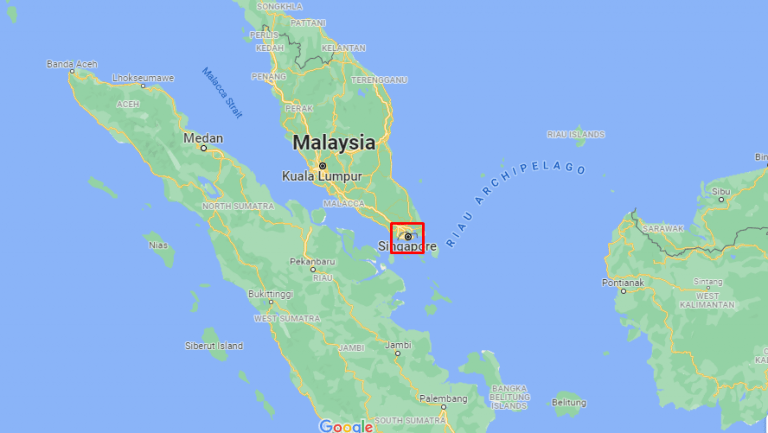
Singapore is a sovereign island state at the southern end of the Malay Peninsula.
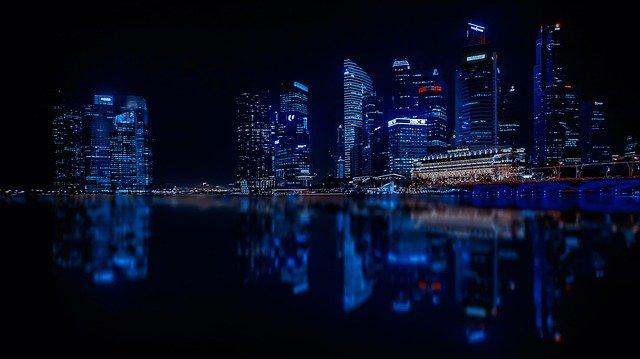
The Republic of Singapore is an advanced, modern metropolis and one of the greatest success stories in Asian history.
Singapore is a sovereign island country and city-state at the southern end of Peninsular Malaysia.
Singapore history
It was founded in 1819 and was a British colony until 1959.
In 1959, Singapore gained internal self-government, not full independence. It ended British colonial rule in 1963 by merging with Malaya, Sabah, and Sarawak to form Malaysia.
Full sovereign independence was achieved on August 9, 1965, after separating from Malaysia.
In the beginning of its independence, there were some significantly turbulent years, but despite the lack of natural resources, this tiny nation developed at a rapid pace and became one of the Four Asian Tigers (together with South Korea, Hong Kong and Taiwan).
Singapore economy
It did this by focusing on international trade and economic globalization, free trade and very minimal trade barriers or tariffs.
It’s now a highly developed country, and one could successfully argue it’s the most advanced nation in this region – and even more so than most Western nations.
It has a very high GDP per capita (usually top 5 to 10 in the world), is a major financial hub, a tax haven, a top performer in education, quality of life, safety, healthcare, fast internet connection, life expectancy, and so on.
Yes, it’s really, really good in many aspects.
Singapore politics
It’s governed as a unitary parliamentary republic, based on common law. While it technically is a multi-party democracy, in reality the People’s Action Party has been in charge of the nation since its inception.
Singapore is a member of several leagues, such as ASEAN, APEC, the UN, WTO, and the Commonwealth of Nations.
It boasts a highly efficient public transportation system, a quality of life which cannot be equaled by many other larger nations and, unfortunately, an expected and concomitant high cost of living.
There are 4 official languages in Singapore: English, Malay, Mandarin and Tamil, attesting to the great cultural diversity (the good kind) in this little state.
Despite its moderate size, Singapore consists of 63 islands, and because of land reclamation projects, Singapore’s land area has increased by over 25%.
Unfortunately, due to urbanization it has lost nearly all of its historical forests, and it’s basically just a city now, with some nature reserves and parks strewn about.
Climate wise, you can expect a uniform average temperature, high humidity and plenty of rain. A typical tropical rainforest climate, in other words.
Requirements for moving to Singapore
The requirements for moving to Singapore are unfortunately a bit more restrictive than in many other Asian countries.
Most nationalities (including citizens from the US, EU, UK, Canada, Australia, and many others) do not need a visa in advance to enter Singapore for short-term visits.
They receive visa-exempt entry (typically for 30 or 90 days) upon arrival. Only passport holders from specific visa-required countries (e.g., India, China, Russia, Nigeria) need an entry visa in advance.
Permanent residence is possible via employment, investment or a familial connection.
You can also start a business here, and attain it that way. However, as with everything else in Singapore, this will cost a pretty penny.
To secure residency via investment, you must go through schemes like the Global Investor Programme (GIP), which requires investing S$10 million (USD ~$7.5M+) in a business/fund, or establishing a family office with S$200M+ in assets under management.
Singapore does not have a Digital Nomad Visa. You cannot legally move to or reside long-term in Singapore simply by earning money online via a foreign sole proprietorship or remote business.
Entering on a tourist Social Visit Pass to work remotely full-time violates local visa conditions if done as a residency workaround. Long-term stay requires a formal work pass (e.g., Employment Pass, ONE Pass, Tech.Pass, or EntrePass).
If you so desire, you can get citizenship after only two years of permanent residence – HOWEVER!
While statutory law allows a Permanent Resident (PR) to apply for citizenship after 2 years, actual approval rates for adult PRs with only 2 years of residency are exceedingly low unless you have exceptional economic contributions, deep family ties, or specific strategic integration.
Furthermore, Singapore strictly forbids dual citizenship, so getting Singaporean citizenship requires you to renounce your birth passport.
Additionally, male citizens and second-generation PRs are subject to mandatory National Service (military conscription).
As with every other country I talk about on this website, the only true requirement for moving to Singapore is the ability to earn money online, from wherever you want, whenever you want, on your own terms.
Yes, you could get a job in Singapore and work for a company … but this leaves you very vulnerable, because if you get fired, your income dries up and it could even lead to your visa/residence being revoked.
You need to have your location independent business, for reasons I’ve talked about in detail in my article Location independent income.
In Singapore this comes with an additional threshold: your income needs to be quite high, because the cost of living in Singapore is rather steep.
What is the cost of living in Singapore?
Singapore is one of the most expensive cities in Asia. It used to be comparable to Tokyo, Japan, however right now, Singapore is significantly more expensive than Tokyo.
Tokyo has experienced substantial currency devaluation (weak yen) and lower inflation over the years, making rent, food, and daily living in Tokyo roughly 40% to 50% cheaper than in Singapore.
According to Numbeo, the average monthly cost of a single person is around $1,200, excluding rent.
If you include rent, you’re looking at nearly $2,500 per month for a single person. If you have a family, this number could easily quadruple.
Yes, this isn’t a large amount if you make a decent Western-sized income, but it is at least triple that of other Southeast-Asian countries such as Vietnam, Thailand and the Philippines.
Moving to any other neighboring nation will decrease your cost of living significantly – but will also come with a lower “quality” of life, depending on what you value in life.
For example, moving to a smaller city the Philippines means you’d be paying about 25% of what you were in Singapore (roughly 35% to 50% in Manila), but you’d give up living in a modern metropolis.
Benefits of living in Singapore
-
Prosperous metropolis
Singapore is a thriving, multicultural nation. A very modern and advanced city, with all the comforts and quality of life-elements you could want
-
Very safe and clean
Singapore is one of the safest countries in the world, with good scores on just about every metric. It’s also a very clean city, something I personally really appreciate.
-
Excellent public transportation
Singapore has a state-of-the-art public transportation system in the form of a subway/metro. Comparable to those of Tokyo and Shanghai, it works nearly flawlessly and is a cheap and efficient way to get citizens across the city
-
High English proficiency
English is one of Singapore’s official languages, and as such its citizens have a very high proficiency. In Asia, Singapore is without a doubt the best option if you only speak English (with Philippines and Malaysia good options too)
-
Doing well economically
While Singapore has already had its major economic growth spurt, it is still rising economically every single year
-
No taxes on SOME international income
Foreign-sourced income brought into or remitted to Singapore by individuals is generally exempt under Section 13(7A) of the Income Tax Act, provided it is passive or non-trade income.
Downsides of living in Singapore
-
Way too humid
An average humidity of 84% isn’t awesome. I like a lot of sunshine and a warm climate, but sweating my ass off every time I walk outside for 5 minutes can seriously fuck off. This is without a doubt one of the major reasons why Singapore isn’t for me
-
Potentially taxes on SOME of your income
If you run a trade or active business from within Singapore (e.g., managing your foreign client work or remote business while physically sitting in Singapore), the Inland Revenue Authority of Singapore (IRAS) considers that income Singapore-sourced, making it subject to standard progressive personal income tax (up to 24%) or corporate tax (17%).
-
High cost of living
Singapore is one of the most expensive countries in the region, and its cost of living is rather high
How is life for expats in Singapore?
Life in Singapore for foreigners can be truly awesome.
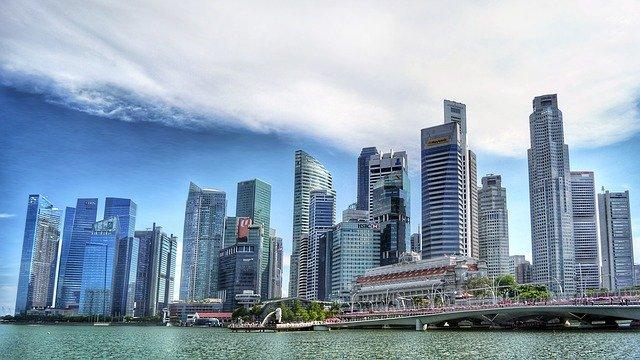
Singapore is a thriving, bustling city, an economic power-house both regionally and internationally.
One of the greatest success stories in the region, a combination of all the modern conveniences and the typical Asian culture.
If you’re at all interested in living in Asia, but you prefer to not give up any of the niceties of living in a modern city, Singapore is for you.
You’d of course need to make a decent, location independent income, and you’d need to be able to deal with the humidity.
To me, Singapore is a combination of Dubai and the Philippines:
It has the Asian thing going, and it’s basically a more expensive, modern, efficient, prosperous and luxurious version of the Philippines.
Everyone speaks English and it’s hot as fuck in both countries.
Singapore gets you a higher standard of living, with all the modern amenities, but the Philippines is a way cheaper country, and it has beautiful beaches.
Singapore is ideal for people who want to escape the collapsing West to an Asian country, but aren’t willing to give up on their expected high-cost, high-quality-of-life lifestyle.




Probably one of the best banking/brokerage flags in the world (tied with Dubai imo).