Moving to Honduras
 ByStephen

SafetyWing
- Global coverage in 180+ countries
- Starts under $63 per month
- Buy before or while already abroad
What is Honduras?
Honduras is a beautiful yet dangerous Central American nation
Honduras, officially known as the Republic of Honduras, is a country located in Central America. It is bordered by Guatemala to the west, El Salvador to the southwest, and Nicaragua to the southeast.
To the north, it has a coastline along the Caribbean Sea, while a small portion of its southern border touches the Pacific Ocean.
The country has a total area of approximately 112,492 square kilometers (43,433 square miles).
Honduras civics and history
Honduras has a population of over 10 million people. The capital and largest city is Tegucigalpa, which is situated in the south-central interior highland region of the country.
The official language is Spanish, and the majority of the population practices Roman Catholicism.
The history of Honduras dates back to ancient times when it was inhabited by various indigenous cultures, including the Maya civilization.
The region later came under Spanish rule in the 16th century. Honduras gained independence from Spain in 1821 and subsequently became a part of the Central American Federation.
The country has experienced periods of political instability, including military coups and civil unrest, throughout its history.
Honduras has a diverse and vibrant culture influenced by its indigenous roots, Spanish heritage, and African and Caribbean influences.
Traditional music, dance, and art play an important role in Honduran culture. The national dish of Honduras is “baleadas,” a tortilla filled with beans, cheese, and various toppings.
Honduras economy
The economy of Honduras is primarily based on agriculture, manufacturing, and services. It is one of the largest exporters of coffee in the world.
Other important agricultural products include palm oil, sugar, and shrimp.
The country has also seen growth in industries such as textiles, clothing manufacturing, and tourism.
Honduras nature
Honduras boasts a diverse and beautiful natural landscape. It is home to numerous national parks, nature reserves, and protected areas, which preserve its rich biodiversity.
The tropical rainforests, cloud forests, mangroves, and coral reefs of Honduras are home to a wide variety of plant and animal species.
The country also has several Mayan archaeological sites, such as Copán, which attract tourists from around the world.
While Honduras offers natural beauty and cultural richness, it also faces challenges. Poverty, inequality, and high levels of violence and crime are among the social issues the country confronts.
However, efforts are being made to address these challenges and promote sustainable development.

Living in Honduras
Remittances sent from Hondurans working abroad also play a crucial role in the country’s economy.
A significant portion of the population has migrated to the United States and other countries in search of better economic opportunities (which, for them, is definitely the case – but for you, as a Westerner, the opposite is true), and the money they send home represents a major source of income for many families.
In fact, these remittances account for a large share of Honduras’s national income and help support household spending and local businesses.
They routinely account for 25% to 30% of the nation’s total Gross Domestic Product (GDP), making Honduras one of the most remittance-dependent countries in the Americas.
Another important feature of Honduras is its strategic geographic position in Central America.
The country sits between major regional markets and has invested in ports, highways, and logistics infrastructure in an attempt to strengthen its role in international trade.
Puerto Cortés, located on the Caribbean coast, is one of the most important ports in the region and serves as a key hub for exports and imports.
In recent decades, Honduras has also become a significant destination for eco-tourism and adventure travel.
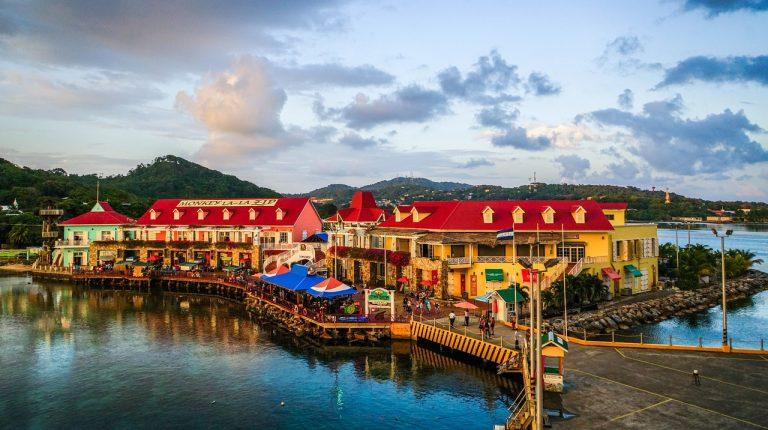
Visitors are drawn not only to its tropical landscapes but also to the Bay Islands, which lie off the Caribbean coast.
These islands are known for their clear waters and vibrant marine life, making them popular with divers and snorkelers exploring the Mesoamerican Barrier Reef system, the second-largest coral reef in the world.
The country’s demographic structure is relatively young, with more than 50% of the population estimated to be under the age of 25–30, presenting both a major demographic dividend opportunity and social pressure on job creation and schooling.
Expanding access to quality education and stable employment remains a key priority for the country’s long-term development.
Living in Honduras requirements
The requirements for moving to Honduras vary depending on the purpose and duration of your stay.
Citizens of many countries, including the United States, Canada, the United Kingdom, and most European Union countries, can enter Honduras as tourists without a visa for up to 90 days.
While citizens from these countries do not need a pre-arranged visa, Honduras is part of the CA-4 (Central America-4) Border Control Agreement alongside Guatemala, El Salvador, and Nicaragua.
The 90-day visa-free stay applies to the entire CA-4 region combined, not just Honduras individually. Spending 30 days in Guatemala, for instance, leaves only 60 days of visa-free time for Honduras before requiring a renewal or extension.
However, it’s important to check the visa requirements for your specific nationality as they may vary. If you plan to stay longer or for purposes other than tourism, you will need to apply for the appropriate visa from a Honduran embassy or consulate in your home country.
Honduras residency and citizenship
If you intend to live and work in Honduras for an extended period, you will need to obtain a residence permit. The requirements and procedures for obtaining a residence permit can vary depending on factors such as employment, investment, retirement, or family reunification.
- Pensionado (Retiree): Designed for foreigners who can prove a permanent monthly retirement or pension income (such as Social Security or a annuity) of at least $1,500 USD.
- Rentista (Investment/Passive Income): For individuals earning passive income from foreign investments, rental properties, or dividends.The minimum required income is $2,500 USD per month.
- Investor: Requires a minimum investment of $50,000 USD into a Honduran business, real estate project, or local enterprise.
- Employment & Family Reunification: Available through a local job contract with a registered Honduran company or marriage to a Honduran citizen.
Foreigners can apply for Honduran citizenship after maintaining legal residency for 3 years (this is reduced to 2 years for Spanish or Ibero-American nationals, and 1 year for native-born Central Americans).
While naturalized citizens may face restrictions on holding dual nationality unless a bilateral treaty exists, obtaining citizenship itself is completely legal and accessible.
Honduras cost of living
Apart from that, the cost of living is pretty low (<$1,500 a month), so you don’t need a high income to survive here.
The average English proficiency is Moderate, so even though I would strongly advise you to learn Spanish, in the more touristy areas you should be able to get by in English.
Honduras ranks near the top of Latin America on the EF English Proficiency Index (High/Moderate range) due to strong bilingual education programs in major urban centers like Tegucigalpa and San Pedro Sula.

Living in Honduras advantages
-
Low cost of living
Living in Honduras can definitely be done on a budget
-
Good location
Honduras is located in the middle of the Americas, which means it’s an ideal location for travelers who want to alternate between North and South America
-
Great climate
The climate in Honduras depends heavily on where you live, but in general you can say it’s pleasant
-
Beautiful nature
You can find plenty of gorgeous vistas in Honduras, forests, mountains, beaches, and so on
-
Growing economy
Honduras is a poor country, but its economy is definitely improving
-
Decent logistics
Visa and residency are relatively easy to attain – however citizenship is a no-go
-
No taxes on international income
Honduras does not tax foreign-sourced income earned by residents or expats. You are only subject to Honduran income tax on income generated from sources within Honduras.
Living in Honduras disadvantages
-
High murder rate
Honduras isn’t the safest country around, not even close
-
Poor country
It’s one of the poorest countries in Latin America, so you can expect shoddy infrastructure and other encompassing problems
-
Humid
Honduras has a decent climate, but it is pretty humid
Is Honduras a good place to live?
Honduras isn’t an awesome option, it has way too many major red flags, but it’s not that bad honestly.
I expected this to be a complete shithole, but there are definitely some redeeming qualities here and it could be an option in the future.
The cost of living is low, the weather is nice, the nature is beautiful, the logistics are acceptable and the country is booming, with no taxes on your international income – however, the high murder rate and the poverty and squalor put it solidly near the bottom of countries in Latin America you’d want to move to.