Moving to South Korea
 ByStephen

SafetyWing
- Global coverage in 180+ countries
- Starts under $63 per month
- Buy before or while already abroad
What is South Korea?
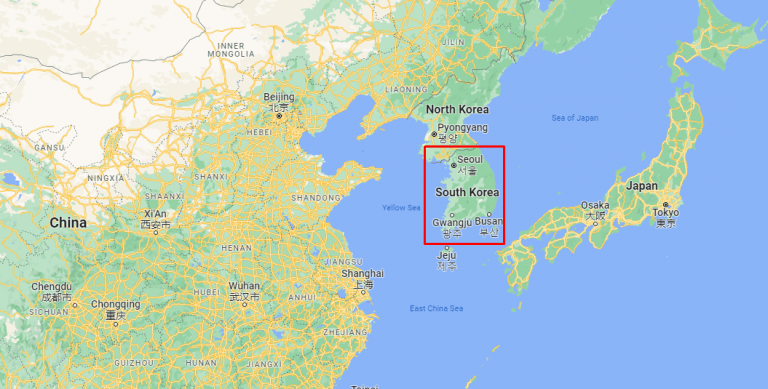
South Korea is a technologically advanced nation in East Asia
Officially known as the Republic of Korea, the southern part of the Korean Peninsula is more commonly referred to as South Korea.
South Korea is one of the Four Asian Tigers (together with Hong Kong, Singapore and Taiwan), a title it earned because of its rapidly soaring economy in the 20th century.
South Korea history
Korea used to be a unified, mostly independent nation until 1910, when Japan invaded.
This lasted until 1945, after which Korea was divided into two zones: the northern part was occupied by the Soviet Union and the Southern part by the United States.
In 1948 they took separate names, the socialist Democratic People’s Republic of Korea and the Republic of Korea respectively.
As you can imagine, this situation didn’t last and in 1950 both sides went to war for 3 years, after which the south engaged in a lasting military alliance with the US.
This alliance is still going strong to this day, and they have strong economic, diplomatic and military ties.
They even have a Mutual Defense Treaty, which means that if either gets attacked in the Pacific Area, both would need to respond.
(The 1953 US-ROK Mutual Defense Treaty explicitly applies to attacks in the “Pacific area” on territories under their respective administrative control. Crucially, like most US treaties, it does not mandate an automatic military response; it states that an attack would lead each nation to act to meet the common danger in accordance with its constitutional processes.)
After the war, North Korea devolved into the isolationist, creepy and dictatorial shithole that it is today, while South Korea boomed.
It currently has a population of over 50 million, of which half live in the Seoul Capital Area.
South Korea pros
South Korea really has a lot going for it:
- One of the largest exporting nations in the world, mostly quality electronics (LG, Samsung)
- One of Asia’s most robust democracies with high levels of press freedom.
- Ranks among the top 20 globally and top 5 in the Asia-Pacific region on the Human Development Index.
- Third-highest life expectancy in the world
- Twelfth-largest economy in the world
- One of the top performing counties in reading literacy, mathematics and sciences
- Fast internet connection
- One of the densest high-speed railway networks
- Second best universal healthcare system in the world
- A top 10 global military power. With approximately 450,000 to 500,000 active troops, South Korea ranks roughly 8th to 11th globally in active military personnel (behind countries like China, India, the US, North Korea, Russia, and Pakistan).
South Korea demographics
That said, it also has to deal with a very high population density of 10 times the global average.
This population is also aging and declining, and South Korea has a very low fertility rate.
It’s a very ethnically homogeneous society, with the highest suicide rate among OECD (developed) nations!
That’s bonkers, and to me this indicates something is horribly wrong underneath the surface of this advanced nation, like Japan.
Almost all students learn English in school, however actual practical conversational fluency across the general population varies widely outside of tourist areas and younger university-educated cohorts.
More than half of South Koreans are not affiliated with any religious organizations, 31% say they are not religious and 15% are convinced atheists.
South Korea climate and geography
If we look at South Korea’s climate, the country can experience very cold winters (up to minus 20 C and minus 4 F) and hot and humid summers.
It’s a mostly mountainous area, with high mountain ranges, narrow coastal plains, river basins, hills, valleys, and about 20 national parks.
South Korea culture
South Korean culture has made its mark globally, especially with regards to music (K-Pop) and cinema (films and series).
I personally really enjoy Korean cinema, and Park Chan-wook is one of my all-time favorite directors.
Even though South Korea has amicable relations with almost all other countries, the major elephant in the room is of course North Korea.
Having a mental and hostile dictator with access to bombs on your only continental border isn’t a great situation to be in.
Requirements for moving to South Korea
The requirements for moving to South Korea are a bit stricter than for many other countries I’ve talked about.
Your entry
Western citizens (from the US, EU, Canada, UK, Australia, etc.) generally get 90 days visa-free entry (though most must register for the K-ETA electronic travel authorization prior to departure).
Tourist visa-free stays cannot be extended easily from within the country under normal circumstances.
Foreigners wanting to stay longer must leave the country (do a visa run to a nearby destination like Japan or Taiwan) or transition to a long-term visa.
In short, it’s easy to go here, harder to stay.
Residency
South Korea offers an official Workation / Digital Nomad Visa (F-1-D), allowing remote workers earning an foreign income to reside legally in Korea for up to 3 years.
Getting Permanent Residence is also possible through an Investor Visa – which stipulates that you “need to generate profit or have some economic activity in the country.”
You can invest in real estate, a government fund, or start a business to attain this.
However…
- Investing in real estate, government public-benefit funds, or a small business does not give you Permanent Residence (the F-5 visa) right away.
- Standard investment programs grant a Temporary / Long-Term Residency Visa (F-2 visa). You must maintain that investment and reside in the country for at least 5 years before converting your status to F-5 Permanent Residence.
The Exception: The government does offer immediate permanent residency for High-Value Public Interest Investors (F-5-25), but it requires a massive capital deposit of 3 billion KRW (~$2.2 million USD).
Regular D-8 business investors must invest at least $500,000 USD and hire at least 5 full-time Korean employees to get an F-5-5 investor permanent residence permit.
Citizenship
Citizenship is possible after 5 years, but you do need to be proficient in Korean.
Under Article 5 of the Nationality Act, General Naturalization requires 5 consecutive years of legal residence in Korea and passing the Social Integration Program (KIIP) or the Comprehensive Naturalization Test (which tests high-level Korean language proficiency and culture).
The level of English is moderate, so if you only engage with educated people, you should be able to make yourself understood, but for daily life I would strongly advise you to learn at least basic Korean.
The cost of living in South Korea is also pretty elevated compared to other Asian nations, so if you want to move here, you do need to earn a decent income.
What is the cost of living in South Korea?
The average cost of living in South Korea lies around $1,500 a month for a single person, depending on where you live.
You could get by with less, but I wouldn’t recommend it.
In fact, if you want to live a good life in South Korea, making at least $2,000 to $3,000 is required.
The biggest financial hurdle in South Korea isn’t the monthly rent or food, it’s the mandatory housing deposit system (Wolse or Jeonse).
Standard monthly lease agreements (Wolse) require a upfront key-money deposit ranging from 10,000,000 to 20,000,000 KRW (~$7,500 to $15,000 USD) for a modest studio flat, even if monthly rent is low.
Great if you’re the land lord, not so awesome if you just want to rent.
Keep in mind that you could be taxed on your international income if you reside here on a permanent basis for over 5 years, so you need to take this into account when calculating how much you’ll actually need to earn.
The official explanation: under Korean Income Tax Law, foreign residents who have lived in South Korea for 5 years or fewer (accumulated out of the preceding 10 years) are exempt from Korean tax on foreign-source income, provided that foreign income is not remitted or transferred into a Korean bank account.
Benefits of living in South Korea
-
Advanced nation
South Korea is one of the most advanced nations in Asia. Many of its cities are high-tech and feature a high standard of living
-
Technologically advanced transport network
One of the main reasons I love countries like South Korea and Japan is their high quality transportation, such as high-speed railways, highways, buses, ferry services and air routes
-
Safe
South Korea is pretty safe, internally speaking. It has low crime rates, and the people are generally pretty friendly
-
Easy entrance
Westerners often do not need a visa to visit South Korea, up to 90 days. However, you cannot extend it.
-
Economic powerhouse
South Korea has already seen most of its strong economic growth in the past, but currently it is still growing at about 2% a year. Not amazing, but better than nothing.
-
Strong educational system
If you want to raise children and give them a bright future, South Korean education is top-of-the-line
Downsides of living in South Korea
-
Higher cost of living
South Korea is a prosperous nation and this comes with a higher cost of living
-
Taxes on international income
Depending on circumstances, you could get taxed on your international income if you live here for more than 5 years.
-
Dangerous neighbor
South Korea shares one continental border, with North Korea. Needless to say, their relations aren’t good, and having nukes pointed at you, held in check only by a dictatorial man-child, isn’t very conducive to long-term health
-
Strong ties to the US
South Korea is tied to the US economically and militarily, which means that when the US collapses, South Korea will feel the effects. If the US gets into a war, it does not automatically drag South Korea into global conflicts where the US is involved elsewhere in the world, but it’s not impossible that it does get involved, for example when the conflict involves China, Taiwan or North Korea

How is life for expats in South Korea?
South Korea has a lot of similarities with Dubai on the surface.
While both feature ultra-modern infrastructure, safety, and high tech integration, their fundamental structures differ drastically:
- Taxes: Dubai has 0% personal income tax and no worldwide taxation. South Korea has progressive personal income taxes (up to 45%) and worldwide taxation after 5 years.
- Culture & Society: Dubai is built on a minority-local, majority-expat workforce (~85% foreigners), whereas South Korea is one of the most ethnically homogeneous societies in the world, making long-term social integration far more challenging for expats.
If you earn a decent amount of money, South Korea can be a really great country to live in.
- Under Korean tax law, foreign residents who have lived in South Korea for 5 years or fewer (out of the preceding 10 years) are exempt from Korean tax on foreign-source income, provided those funds are kept in foreign accounts and not remitted into Korea.
- That means that after 5 years, you will get taxed here… so it’s not a good permanent Base, in my opinion.
It has a strong economy, a very high standard of living and comfort, with the most modern necessities, luxuries, and basically anything you could ever want.
You’ll probably need to learn Korean if you are serious about staying here long-term, but English should get you pretty far if you stick to educated social circles.
It’s a safe and clean country, with friendly locals, beautiful nature, interesting culture (that #1 Suicide Spot though..) , tasty food, and a great public transportation network.
That being said, South Korea also features clear seasons, with cold winters and hot summers, and it has two massive flaws which stop me from recommending it as a nation to escape the West from.
- The first is the fact that it is “South” Korea, meaning there is a “North” Korea as well, a despotic and crazed regime which is hostile towards it. And said regime supposedly has access to nuclear weapons, and at the very least advanced missiles. Having nukes pointed at you is a massive red flag, and it only takes one too-crazy Kim to take power to eradicate whole cities.
- The second is the fact that it has strong ties with the US. When the US collapses, South Korea will be strongly inconvenienced. If the US goes to war with, say, China, South Korea could be dragged into it, which obviously cannot be a good idea.
All of those things together make for a rather unfortunate conclusion that South Korea is not a good country to escape the West from.
You can visit it often (which I certainly intend to do), but I would advise against investing in the country or staying there long-term.