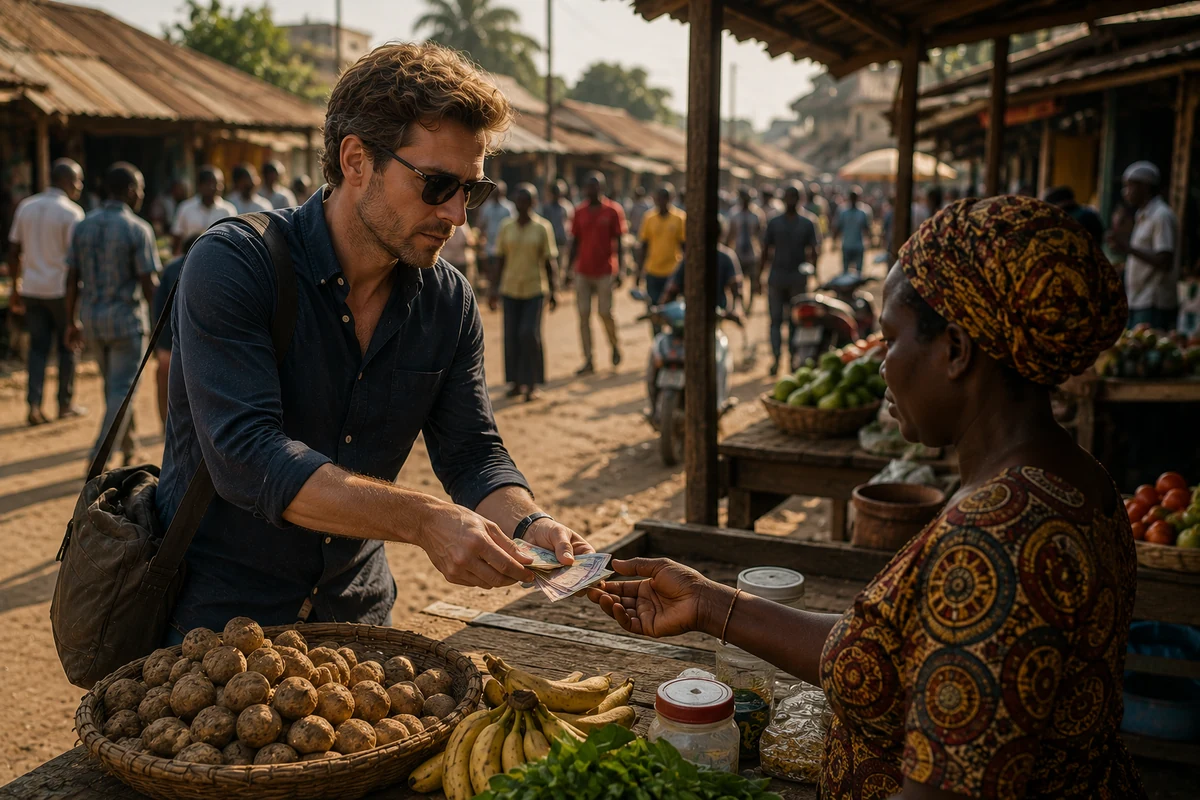
The Realities of Living in a Cash-Based Economy

TLDR
- Cash Dominance: Cash remains essential across Latin America, Southeast Asia, Africa, and the Balkans, especially outside major cities.
- Psychology Shift: Physically handling notes daily changes how you budget, negotiate, and view your spending habits.
- System Failures: Foreign cards and digital banking often work inconsistently, making local cash access and backup systems essential.
- The Tradeoff: Cash environments offer privacy and flexibility but increase security and bookkeeping challenges.
- Adaptation: Successful expats combine modern offshore banking with practical day-to-day cash management habits.
A lot of people fantasize about leaving the West and settling somewhere slower, cheaper, and less bureaucratic. They read about what you need to move to another country and dream of escaping the digital grid. Then they arrive and discover something surprisingly basic: almost everything runs on cash.
The landlord wants rent in banknotes. The neighborhood restaurant does not accept cards. Your gym membership gets paid monthly in an envelope. Even the handyman fixing your air conditioner expects cash, preferably in exact change.
For someone coming from a highly digitized country, this can feel like stepping backward at first. After a while though, you realize a cash only society is not necessarily dysfunctional. They simply operate differently.
And if you plan to spend serious time abroad, especially outside polished expat bubbles, understanding living in cash-based economy dynamics becomes part of basic survival.
👑 Cash Is Still King in Many Parts of the World
One thing people underestimate is how uneven global financial infrastructure still is. In cities like Singapore, Seoul, or Stockholm, you can live almost entirely without touching physical currency. But large parts of Latin America, Southeast Asia, Eastern Europe, and Africa remain heavily cash-oriented, particularly outside capital cities and tourist centers.
Even where digital payment alternatives exist, small businesses often avoid card processing fees or operate partly informally. Cash remains faster, simpler, and culturally familiar.
📍 Where Cash Rules Daily Life
- Mexico: High-end districts in the capital are digital, but smaller markets, repair shops, and local restaurants require cash.
- Colombia & Peru: Local transport, street vendors, and regional tour guides operate exclusively via physical notes.
- Southeast Asia: When moving to Thailand or the Philippines, secondary cities depend entirely on cash for everyday commerce.
According to global financial inclusion metrics tracked in The Global Findex Database by the World Bank, card utility remains deeply fragmented globally. When you opt for long-term living in secondary cities, that micro-level fragmentation means physical currency dictates daily survival. People simply trust cash more.
🧠 Your Relationship With Money Changes Fast
Living in a cash-based environment changes your psychology around spending almost immediately. When you physically hand over notes every day, you become far more aware of where money goes. Digital transactions feel abstract. Cash feels real.
A funny thing happens after a few months of living in cash-based economy zones: you start mentally calculating everything in stacks of bills instead of app balances. You notice spending patterns faster because you literally watch the wallet shrink.
Personally, this was one of the unexpected upsides of managing cash economy living expenses. Expenses became easier to track without budgeting apps constantly buzzing in the background.
[Digital Spending] --> Abstract, low-friction --> Harder to track mentally[Physical Cash] --> Tactile, high-friction --> Instant budget awarenessThe tradeoff is that cash systems can make financial organization messier if you are not disciplined. Small daily purchases disappear from memory quickly. Without digital transaction histories, it becomes easier to underestimate your true spending.
That matters more than people think when your income comes from overseas and exchange rates fluctuate constantly. To keep your head straight, you have to develop strict manual habits, similar to tracking a multi-currency family budget where cash outlays aren’t neatly itemized by an app.
🏦 Banking Access Becomes a Strategic Issue
In a cash-heavy country, ATM access suddenly matters a lot. You stop casually assuming cash will always be available nearby. You learn which machines charge outrageous foreign card fees and actively master strategies for avoiding foreign transaction fees while traveling.
You learn which banks reject international withdrawals randomly. You learn which ATM networks run out of cash before holidays. And yes, that actually happens.
🛡️ The Expat Redundancy Framework
- Primary Card: Used strictly for major ATM cash drawdowns at trusted local branches.
- Backup Cards: Hidden securely in your apartment in case of account lockouts or machine skimings.
- Local Bank Account: Simplifies local transfers, larger domestic payments, and minimizes local ATM fees.
- Hard Currency Reserve: Stashing emergency physical USD or EUR bills completely separate from daily cash.
The more international your life becomes, the less you can rely on one institution functioning perfectly all the time. Learning how to open a second bank account abroad becomes an essential step to ensure you never get locked out of your capital when you need to make a transaction in a cash only society.
🏢 Renting Property Gets More Complicated
This surprises almost everyone during their first long-term stay abroad. In many cash-oriented countries, landlords prefer cash rent payments even when bank transfers are technically available. Some do this for convenience.
Some do it because local banking in other countries remains inefficient. Others simply prefer keeping things informal. That means you may find yourself carrying several months of rent physically through a city.
📋 Cash Rental Protocol
- Acknowledge Local Norms: Places like Cambodia or Honduras heavily favor handwritten cash receipts over digital bank transfers.
- Document Everything: Photograph signed paper receipts immediately to prevent damage or loss.
- Confirm Digitally: Send a text or email receipt confirmation to the landlord immediately after the exchange to build a digital trail.
- Know Your Options: Fully review the dynamics of renting vs. buying abroad before handing over massive physical deposits.
This does not automatically mean fraud. It just means systems function differently than what you are used to. Still, record-keeping becomes your responsibility. Future residency applications, visa renewals, or tax documentation may depend on proving financial activity later.
🤝 Informal Economies Create Unexpected Flexibility
Here is the part many Westerners quietly grow to appreciate. Cash-based systems often feel more human. Negotiation becomes normal. Small businesses operate with lower overhead. Local tradespeople solve problems quickly without endless paperwork, automated systems, or customer support tickets that disappear into the void.
In many countries, knowing how to use cash abroad tips the pricing scale in your favor. Card processing costs, taxes, or administrative fees sometimes disappear entirely during cash transactions.
⚖️ The Informal Tradeoff
- The Pros: Lower prices, direct human negotiation, fast problem-solving, and entry into thriving alternative economies.
- The Cons: Total lack of corporate transparency, reduced systemic efficiency, and complete reliance on personal trust over legal contracts.
There is a stronger sense of local relationship-building. Shop owners remember you. Vendors recognize repeat customers. Service providers become part of your routine. Some people love that flexibility. Others find the lack of structure exhausting.
🔒 Security Becomes More Important
Carrying large amounts of cash changes your behavior quickly. You become more aware of your surroundings. You stop flashing wallets casually. You think carefully about where you store emergency reserves in your apartment.
Most long-term expats eventually develop their own systems. A little cash carried daily. Emergency reserves hidden separately. Backup cards stored in another location. Digital copies of documents secured online via robust digital privacy tools. None of this requires paranoia; it is simply basic adaptation to the risks of cash economy life.
💡 Daily Security Habits
- The Dummy Wallet: Keep a small amount of local currency in an easily accessible pocket; hide your main cash stash deeper.
- Split the Risk: Never store all your physical money in a single location within your home.
- Hard Assets: Supplement your paper stashes by holding tangible value, such as storing gold abroad.
One reality worth acknowledging is that foreign residents stand out financially in lower-cost countries. Even middle-class expats may appear wealthy relative to local averages. That does not automatically create danger, but it does require common sense. Once you understand local norms, the environment feels entirely predictable.
📑 Taxes and Compliance Can Become Tricky
One major downside of living in cash-based economy zones is documentation gaps. If you run an online business, freelance internationally, or manage cross-border income, cash transactions can complicate accounting. Tax authorities in your home country may still expect detailed records regardless of local practices.
This becomes especially important for Americans and citizens of countries with extensive foreign reporting rules who need to know if expats pay taxes abroad. You may live somewhere where cash payments are culturally normal while simultaneously remaining legally obligated to maintain detailed financial documentation back home.
🖋️ Accounting Requirements for Expats
- Log every conversion manually at the exact time of transaction.
- Maintain clear trails of digital transfers from offshore hubs to local cash withdrawals.
- Save invoices and receipts digitally, even if the local business doesn’t track them.
- Keep corporate filings separate, particularly when utilizing structures like setting up a foreign LLC as a non-resident.
The less formal your local environment becomes, the more important your personal organization becomes. Good bookkeeping matters even more abroad than it does domestically.
🧬 The Hybrid Lifestyle Most Expats Eventually Build
Very few long-term expats stay fully cash-based forever. What usually happens instead is a hybrid system. Income arrives digitally. Savings remain internationally diversified. Investments stay in regulated institutions abroad. But daily life operates heavily through local cash spending to cover cash economy living expenses.
You end up moving between two financial worlds at the same time. A remote consultant running an affiliate marketing business in moving to Colombia or moving to Paraguay may receive payments through an international platform, hold savings in USD, invest through a foreign brokerage, and still buy lunch every day using folded banknotes from a local ATM.
🌐 The Optimal Setup
[Global Digital Layer] -> Foreign Income -> International Brokerage -> Offshore Banking | v[Local Physical Layer] <- Cash Expenses <- ATM Withdrawal <- Local Financial SystemThe key is flexibility. Purely digital assumptions break down in many parts of the world, including developing markets that have yet to fully embrace digital payment alternatives. But relying entirely on cash creates unnecessary vulnerability too.
The sweet spot is having multiple ways to operate, perhaps using a Five Flags framework to structure your banking, residency, and asset protection across borders.
⏳ Learning to Slow Down
One subtle thing a cash only society teaches you is patience. Highly digitized societies optimize for speed. Tap your phone. Scan a QR code. Automatic billing. Instant subscriptions. Friction disappears, but so does human interaction.
Cash systems slow transactions down slightly. You count money. You interact more directly. Small exchanges become more personal. At first it feels inconvenient. Then, strangely enough, many people stop minding it. There is a certain grounded feeling that comes from physically participating in local economic life rather than floating through endless digital transactions.
🎯 Key Takeaways for Expats
- Accept financial friction as a lifestyle feature, not a system failure.
- Prioritize manual accounting to counter the lack of automated banking statements.
- Diversify your card access points to protect against localized ATM blackouts.
- Always preserve digital trails of local payments to protect future residency paths.
That does not mean abandoning modern finance. International banking, digital payments, and storing wealth legally outside your home country still matter enormously. But living in a cash-heavy world reminds you that large parts of the globe still operate on systems built around trust, familiarity, and physical exchange.
If you plan to build a life abroad long term, learning to test a country means testing its financial friction too. Adapting to that cash reality becomes a core part of the adventure rather than an inconvenience to fight against.