When Countries Collapse: Early Warning Signs and Exit Strategies

 ByStephen
Wise
Every country tells itself the same story: “It can’t happen here.”
Argentina said it before repeated sovereign defaults. Lebanon said it before its banking system froze withdrawals in 2019. Sri Lanka said it before it ran out of foreign currency reserves and fuel imports stalled in 2022.
Countries do not collapse overnight. They weaken in layers. If you’re paying attention, you see the cracks long before the lights flicker.
You don’t need panic. You need pattern recognition. And you need options.
Let’s talk about both.
Start with public debt. When government debt rises far beyond economic output, flexibility shrinks.
The United States, Japan, Italy, and several other developed economies now carry public debt levels exceeding 100% of GDP. That’s not conspiracy talk. It’s published data. The US, for example, is nearing the 40 trillion mark. Yikes.
High debt alone doesn’t cause collapse. Japan has carried elevated debt for decades. But when debt climbs while growth slows and interest costs rise, governments start making harder choices.
Watch the interest burden. When a growing share of tax revenue goes toward servicing debt instead of infrastructure, healthcare, or security, priorities shift. Taxes rise. Benefits shrink. Political tension increases.
When countries lose control of their currency, things accelerate.
Argentina has experienced repeated currency devaluations and triple-digit annual inflation in recent years. Lebanon’s currency lost the majority of its value after 2019. Zimbabwe’s hyperinflation in the late 2000s is still studied as a textbook case.
You don’t need hyperinflation to feel pain. Persistent high inflation erodes savings quietly. If your purchasing power drops year after year, that’s a slow bleed.
Central bank independence matters here. When political pressure overrides monetary discipline, currencies tend to suffer. That pattern has repeated across continents.
This is where things move from theory to reality.
In Lebanon, depositors were restricted from accessing dollar accounts for years after the 2019 financial crisis. In Greece during the 2015 debt crisis, banks temporarily limited withdrawals and imposed capital controls.
Once a government restricts how you move your own money, the rules have changed.
Capital controls are usually framed as temporary stabilization measures. Sometimes they are. But temporary can stretch far longer than you expect.
If you see foreign exchange restrictions tightening, cross-border transfers becoming complicated, or sudden banking “holidays,” don’t debate ideology. Read the signal.
Economic stress rarely travels alone.
When political polarization intensifies and trust in institutions declines, decision-making becomes reactive. In several Western countries, surveys have shown declining public trust in government, media, and financial institutions over the past decade.
That doesn’t mean immediate collapse. It means social cohesion weakens.
Stable countries rely on predictable legal systems. When court decisions become openly politicized or regulatory frameworks change abruptly, investors notice. So should you.
Collapse isn’t always dramatic. Sometimes it’s gradual decay.
Look at rolling blackouts, underfunded transportation systems, deteriorating roads, overwhelmed public hospitals. These are measurable realities in certain regions during fiscal crises.
In Sri Lanka’s 2022 crisis, fuel shortages led to long queues and power cuts. In Venezuela, infrastructure breakdown became a daily reality for years.
When basic services become unreliable, quality of life drops. Businesses leave. Talent leaves. The tax base shrinks further. It’s a loop.
Now, here’s the part most people ignore: you don’t need full collapse to justify an exit plan.
The worst time to plan your exit is during panic.
When borders close, flights spike in price, and capital controls tighten, your options narrow fast.
An exit strategy doesn’t mean abandoning your country tomorrow. It means building flexibility while systems still function normally.
A second residency or long-term visa in another country is a structural hedge.
Countries in Latin America, Southeast Asia, and parts of Eastern Europe offer legal pathways for residency through income requirements, property ownership, or retirement visas. These programs are public and regulated.
Holding legal residency gives you the right to stay, rent property, open local bank accounts, and integrate gradually. It transforms relocation from emergency escape to planned transition.
If you qualify for a second citizenship through ancestry, that’s even stronger. Dual nationality expands travel freedom and reduces dependency on one passport.
If all your assets sit in one country, under one regulatory framework, you’re exposed.
Opening a bank account in a stable foreign jurisdiction where you have legal status spreads institutional risk. Many countries allow non-citizen residents to open accounts with proper documentation.
Understand local deposit insurance rules. Know the reporting obligations in your home country. Stay compliant. The goal is diversification, not drama.
Even holding a portion of your savings in different currencies reduces exposure to a single monetary system.
If your income depends entirely on one domestic employer, your flexibility is limited.
Remote work, online businesses, consulting, or location-independent investments expand your options. The global shift toward remote employment accelerated significantly after 2020. Many multinational firms now maintain hybrid or fully remote roles.
Portable income doesn’t guarantee security. But it increases mobility. If conditions deteriorate locally, you’re not starting from zero elsewhere.
This one is less financial and more psychological.
If your cost structure requires high fixed expenses in one expensive city, relocation becomes painful. High mortgage debt, car loans, and long-term contractual obligations anchor you.
Countries that experienced economic crises often saw emigration rise among younger and more mobile populations first. Those without heavy financial anchors moved more easily.
Keeping your lifestyle flexible isn’t about minimalism as a fashion statement. It’s about optionality.
Collapse narratives attract emotion. Fear sells headlines.
But real collapses follow identifiable economic and political patterns. Sovereign debt distress. Currency crises. Banking restrictions. Institutional breakdown. These have historical precedents.
At the same time, many countries with high debt or political noise continue functioning for decades. Japan is a clear example of prolonged high debt without systemic breakdown.
Your job isn’t to predict doomsday. It’s to observe trends and prepare quietly.
When emigration surges, visa processing times extend. Residency programs tighten. Governments under fiscal stress may raise exit taxes or introduce wealth reporting measures.
You’ve seen versions of this in different regions over the past decade.
Planning early gives you leverage. Waiting until panic spreads removes it.
That doesn’t mean you need to uproot your life immediately. It means you research. You visit potential destinations. You understand legal pathways. You open conversations with banks and immigration lawyers before you need urgency.
Countries rarely implode in a single dramatic moment. More often, they erode. Fiscal stress builds. Currency stability weakens. Political trust fractures. Services decline.
If you watch the signals calmly, you can act long before crisis becomes visible to everyone else.
An exit strategy isn’t pessimism. It’s structural resilience. Legal mobility, diversified banking, portable income, and flexible living arrangements create room to maneuver.
You don’t have to assume your country will fail. You simply acknowledge that systems change.
And when they do, having options turns uncertainty into opportunity.

 ByStephen
In an era dominated by technological advancements and interconnectedness, concerns about digital privacy have reached unprecedented levels.
 ByStephen
Welcome to the end of the Western world. 2026 will be the year the collapse becomes obvious to the majority of people still living inside it. Not because everything suddenly explodes overnight, but because the accumulated rot finally reaches a point where denial is no longer possible. This is the year where deterioration stops being…
 ByStephen
The West has been in a steady state of decline for many years. The only question that remains is when it will collapse.
 ByStephen
The history of historical exit restrictions shows us that governments will always prioritize state survival over individual freedom.
 ByStephen
Today I’ll talk about the impact of inflation, a horrible yet unavoidable effect of the current economic system.
 ByStephen
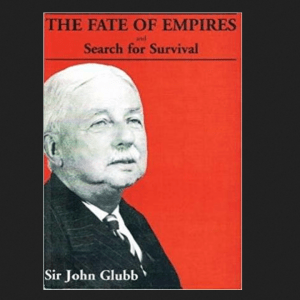
Glubb’s Fate of Empires is a concise treatise about the rise and fall of many of mankind’s empires. Read the Fate of Empires summary here.