Don’t Live Where You’re Going to Die
 ByStephen
Wise
- Up to 75% cheaper than banks
- Multi-currency card usable in 160+ countries
- 70%+ transfers arrive in under 20 seconds
Most people follow a script so narrow it barely qualifies as a life.
They are born in a particular place, raised there, go to school nearby, find work in the same general area, maybe move a few neighborhoods over, and then settle into a house not far from where it all started.
Decades pass. Habits harden. The world shrinks. Eventually, they die, often within a short drive of the hospital where they were born.
This pattern is treated as normal. Sensible, even.
But step back for a moment and look at it honestly. Isn’t it tragic? Isn’t it sad beyond despair?
To spend your entire existence orbiting a single patch of land, mistaking familiarity for meaning, and proximity for purpose.
You’re Not Choosing a Home, You’re Choosing Your Tomb
When you decide to live “for good” somewhere, what you’re really doing is choosing the place where your story ends.
You are not literally digging your own grave, but the symbolism is quite obvious.
You are already, decades in advance, selecting the patch of land in which you will be buried, the climate in which you will age, the system that will manage your decline, and the culture that will frame your final years.
And unfortunately, for most of you reading this, that means a Western nation – which comes with its own issues, but I’ve talked about that before in great detail already.
People talk about “putting down roots” as if immobility were virtuous. As if remaining close to one’s birthplace were evidence of wisdom rather than inertia.
But roots are for trees. Humans were never meant to be fixed in place – at least not if you value freedom and long-term happiness.
The Comfort Trap
The reason most people never leave isn’t because they can’t (anyone can). It’s because staying is comfortable.
Familiar streets. Familiar faces. Familiar assumptions about how the world works. Leaving requires confronting uncertainty: new languages, new rules, the humbling realization that you are not the center of everything, and that your country sucks, wherever you were born.
So people stay. They build entire identities around local sports teams, ridiculous regional grievances, and shared nostalgia. They confuse stagnation with stability.
And slowly, without realizing it, they begin to live as if life is something to endure rather than explore, something you have to grind out instead of enjoying to its greatest potential.
The World Shrinks If You Let It
Modern Westerners live in an absurd contradiction. We have unprecedented access to global travel, information, and opportunity, and yet we confine themselves more tightly than many of our ancestors ever did.
Centuries ago, people crossed continents with no maps, no safety nets, no guarantees. Today, with budget flights, instant translation, and global connectivity, many people won’t even consider living more than an hour from their parents.
My own brother is a perfect example of this, as is 99% of everyone I ever knew growing up in my collapsing European nation. Every single one of them has stayed, not just in the same country, but often in the same city as they were born in.
What’s the excuse? Fear dressed up as responsibility, covered by a blanket of comfort and conformity.
A Life Lived Narrowly Feels Longer Than It Is
People who never leave home often complain that time drags on. Years blur together. Seasons repeat ad nauseam. Nothing stands out.
That’s not because time is slowing down, it’s because nothing is differentiating one year from the next.
Contrast that with people who move, adapt, rebuild. Who escape the collapsing Western world and find their fortunes elsewhere. Their lives are segmented into chapters. Distinct eras. Memory anchors.
Movement doesn’t just change where you live. It changes how long your life feels and how much you actually get out of it.
The Barbarian Had It Right
Robert E. Howard understood something that modern people seem to have forgotten.
As Conan puts it:
“You have but one life and one world to live it in. Surely you should experience both as well as you are able. Ymir’s beard, I’d go mad if I were cooped up in a single city all my life.”
That isn’t recklessness. It’s sanity, something most people seem to have forgotten in this enlightened age.
To accept one city, one culture, one climate, one way of thinking as sufficient for an entire human lifespan is a kind of quiet madness. It’s become so normalized that it no longer registers as such.
“But What About Stability?”
This is where the objections come in.
- What about family?
- What about career?
- What about children?
- What about responsibility?
Fair questions, but often asked dishonestly.
Stability does not require permanence. Responsibility does not require confinement.
In fact, tying yourself to a single declining place (economically, culturally, or politically) may be the least responsible choice you can make, especially if you choose to remain in your dying nation.
Mobility is not immaturity. It is risk management.
Death Is Inevitable, but Monotony Is a Choice
You are going to die somewhere. That part is unavoidable. But dying where you were born, without ever seriously testing the width of the world, is a failure of imagination and, frankly, of life itself.
The tragedy isn’t death itself. It’s arriving there having seen so little.
Living elsewhere forces you to confront your assumptions. It reveals how arbitrary many of your beliefs are, about work, relationships, governance, and “normal” life.
Once you’ve seen that, you can never fully accept the idea that this place, wherever you started, is the default or the pinnacle.
Don’t Build Your Life Around Its Ending
You don’t need to become a perpetual drifter (although you could!). This isn’t about restlessness for its own sake.
It’s about refusing to anchor your entire existence to a single geographical outcome.
Live in places you don’t expect to stay forever. Learn systems you don’t intend to grow old in. Let chapters end on their own terms.
Choose life with movement in it.
Because the moment you decide, consciously or not, “this is where I’ll stay until the end,” you’ve already begun retreating from the world. You’ve already begun dying.
Don’t live where you’re going to die. Don’t let the question of where you’ll be in 10 years time be anwered by an “of course I’ll still be here”.
Live a life in which you’re going to wake up every day curious what the next will bring, what adventures await you, where you’ll be next year.
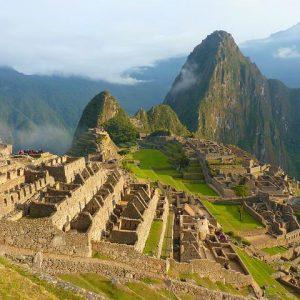
To conclude: these aren’t just random ramblings. I walk my talk. After having spent the past 10 years living in Asia and traveling it extensively, I’ve decided to move to Latin America next, and see what that has to offer.
I have no idea how it’ll go, or where I’ll be this time next year, or in 5 years, or in 50. And that excites me beyond measure.