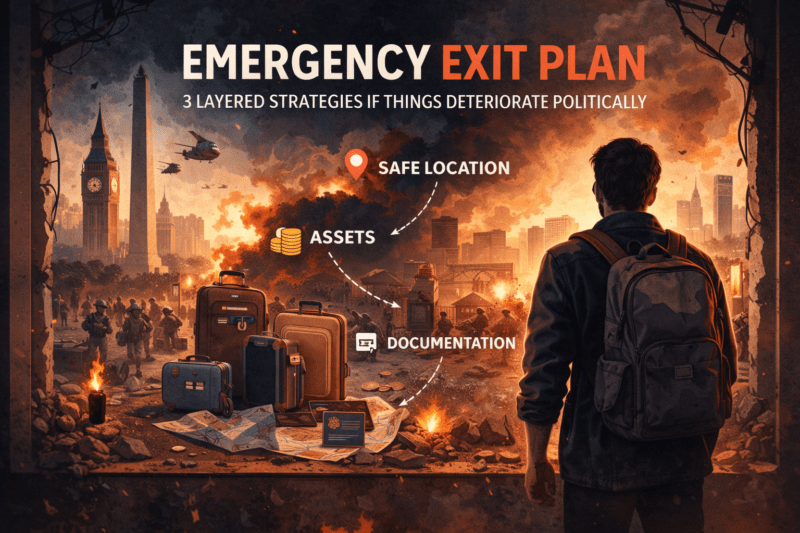
Emergency exit plan: 3 layered strategies when things deteriorate
TLDR
- Have three layers of planning: stay put safely, evacuate locally, and exit the country entirely if things get dangerous.
- Preparation starts before any deterioration: register with your embassy and maintain up-to-date travel advisory awareness.
- Essential documents, funds, and communication plans should be ready in reachable form at all times.
- Know multiple safe routes and alternate destinations, not just a single plan.
- Staying calm, staying connected with authorities and community, and acting early often make all the difference.
Nothing tests your relocation savvy like a sudden political crisis in the country where you’ve built a life. One day your kids are in school, you’re walking the local markets, and your routine feels normal.
The next, borders close, airports shut, and demonstrations erupt on every corner. This is not an abstract nightmare scenario; it happens with startling regularity in unstable regions, and where it does occur, being unprepared can be costly or even dangerous.
The wise expat doesn’t wait until the news flashes “unsafe” to think about exiting. You build a layered exit strategy in advance, because stability can deteriorate faster than anyone predicted.
Here’s a practical, human-centric playbook for how to structure that plan in three layers, from staying safe where you are to getting out of the country if necessary.
Layer One: Stay Safe and Stable Locally
Political unrest often begins incrementally – protests, strikes, and rallies can turn unpredictable. Your first line of defense is preparedness where you are.
In the current year of 2026, this 100% means the collapsing West. Just look at what’s happening in the US right now with all the protests and rallies against/for ICE.
Know Your Local Risks and Resources
When you arrive in a new place, one of the first items on your checklist should be identifying local emergency numbers, security services, and nearby hospitals. Different countries have different systems for calling police, fire, and medical help, and knowing them by heart will pay off in a crisis.
Register with your embassy or consulate. This keeps your presence on their radar and lets them send you alert messages if the security situation changes. Governments offer travel advisory updates for precisely this reason.
They rate destinations from normal precautions up to high threat levels based on threats like unrest, crime, or instability, something I include too in my country reviews. Being aware of changes allows you to adjust behavior and plans before a crisis explodes.
Even if you decide a certain level of risk is acceptable, understanding it and knowing who to call, what numbers to dial, and where safe shelters are gives you a baseline of control. It’s much better than scrambling when things heat up. ([turn1search1][turn1search4])
Establish a Personal Baseline Kit
An emergency kit is more than a disaster cliché. It’s your first practical tool when the unexpected happens.
Have ready:
- Your passport, visas, and identification stored in secure but accessible holders.
- Copies of key documents stored separately in waterproof sleeves or encrypted digital storage.
- At least several days of personal medications, prescriptions, and medical information.
- Portable chargers, flashlights, and a basic first aid kit.
Keeping these items where you can grab them in minutes – not hours – is part of thinking ahead. Trust me, when crisis strikes, you won’t want to be rifling through boxes.
Layer Two: Evacuate Locally When in Direct Danger
Sometimes staying put isn’t dangerous, and sometimes it becomes dangerous. This is the layer where you make the decision to leave your house, neighborhood, or city before things escalate beyond your control.
Early Movement Beats Late Panic
One consistent theme from official crisis planning guidance is this: evacuating early – while routes and commercial travel are still operational – offers the best chances of leaving safely.
Waiting until the last minute often means you’re trying to flee into chaos. Roads may be blocked. Airports could be overwhelmed. Public transport might shut down altogether. Something people all over the world are currently experiencing due to the situation in Iran.
This happens often enough that authorities typically encourage people to take action before the worst of the breakdown occurs. If you can travel by commercial means out of a region, do so as soon as it’s still safe.
Part of your layered strategy needs to include pre-mapped routes. Identify at least two possible exit routes from where you live, not just one. If your main highway is blocked, having an alternative secondary road to a different border town, sea port, or airport can be lifesaving.
Communication Plans Save Lives
Another key part of this second layer is knowing how you will stay in touch. Political instability often disrupts regular phone service, and cellular networks can falter under heavy usage.
A multi-channel communication plan – like having both SIM and satellite options, or reliable messaging apps – ensures you can receive updates, coordinate pick-ups, or reach family members outside the crisis zone.
This layer also involves being informed. Follow local news, join community alert groups, and subscribe to disaster warning systems or embassy advisories. Real-time updates are your situational advantage here.
Layer Three: Exit the Country When the Situation Breaches Safety Thresholds
There comes a point in some crises where evacuation within the country isn’t enough and you need to leave the country entirely. This is the third layer – the full exit, something I’ve been advocating for close to a decade.
Establish Your Exit Criteria Ahead of Time
A practical expat exit strategy defines what signals will trigger the full exit:
- Government orders to evacuate or “do not travel” advisories for your host country.
- Major infrastructure disruptions, like airports shutting down or borders closing.
- Rapid escalation of violence near your neighborhood or transport hubs.
- Consistent warnings from multiple reliable sources – embassies, local government notifications, and credible local news.
Setting these criteria before trouble emerges helps you avoid the paralysis of indecision when things deteriorate. In real crises, situations evolve rapidly, and when you wait to “feel” afraid, it’s already too late.
Plan Your Next Destination
Once you decide to leave the country, you need a destination, a Base.
This layer of your strategy should include at least two fallback locations:
- A nearby safe country where you can take temporary refuge.
- A long-term fallback, like a third residency you’ve already prepared or a home country safe haven.
Besides destinations, consider the methods you’ll use to get there. Commercial flights are ideal, but in past instances of instability, flights were canceled at the last minute. Overland travel to a neighboring country might be your only route.
This is where preparation meets flexibility. If you have passports, visas, emergency funds, and transportation routes ready in advance, you drastically improve your ability to respond speedily without scrambling during panic.
Financial Preparedness Matters
Behind every exit plan is money. Fine-tuning your financial readiness is often overlooked but absolutely essential.
Keep emergency reserves in accessible accounts, have plenty of assets abroad and keep some liquid cash on hand in both local and foreign currency. Relocation during a crisis rarely aligns with your banking day – ATMs can run dry, networks can fail, and card transactions can be refused or blocked.
Having travel funds distributed across accounts – including international ones – gives you options. If your home government offers emergency loans or assistance for evacuation, know their contact protocols and how to request help.
That’s a big part of this third layer. You want financial agility, not financial limbo, during the moments that matter most.
The Value of Practicing Calm and Preparedness
One thing that seasoned expats learn is that panic is often the enemy of survival. The best exit plans are calm, detailed, and rehearsed. They aren’t based on fear but on clear thinking and realistic assessment.
I’ve seen friends sit through rising unrest thinking “it won’t hit us.” Then they scramble at the last moment, pay exorbitant prices for transport, and end up exhausted and stressed. In contrast, those who prepared documents, communications plans, and mapped destinations weeks or months earlier leave with dignity and more peace of mind.
This isn’t about living in fear. It’s about living responsibly and with agency. If political tensions were to rise sharply in your host country – and that can happen even in places originally perceived as stable – being ready makes the difference between a frantic scramble and a structured exit.
Conclusion
A layered emergency exit strategy gives you a framework to navigate political deterioration with foresight rather than hindsight.
- First, secure safety locally and stay informed.
- Second, prepare to evacuate within the country if required.
- Third, have a complete exit plan with destinations, routes, and financial readiness.
By defining the triggers, preparing the tools, and rehearsing your steps, you give yourself options when others may feel cornered.
Good planning doesn’t eliminate uncertainty. But it does mean uncertainty doesn’t have to scare you.