Moving to Costa Rica

Contents
hide

 ByStephen
SafetyWing
Costa Rica is a tropical Latin American country with great weather and beautiful nature
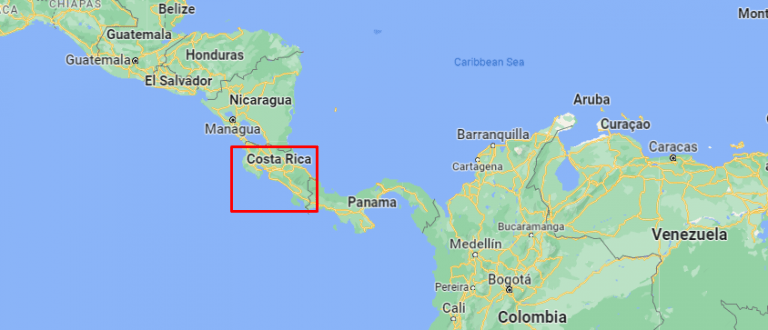
The Republic of Costa Rica is a tiny country in Central America which borders Panama, Nicaragua, the Caribbean Sea and the Pacific Ocean.
Only around 5 million people live here, about half of them in the capital of San José and its environs.
Whereas many Central and Latin American countries are highly unstable violent shit holes, Costa Rica has long been a rather stable democracy with a higher educated workforce.
Of course, Costa Rica (“rich coast”) used to be a Spanish colony until 1821, through the Act of Independence of Central America.
1847 was the year Costa Rica officially declared itself an independent sovereign republic and severed ties with the Federal Republic of Central America.
A century later, it experienced a civil war, after which it abolished its army, making it one of the very few sovereign nations without one.
Costa Rica has attained much higher human development than other countries around this income level, and performs better than most other countries in this region.
The same can be said about other factors, such as democracy, freedom of press and overall happiness.
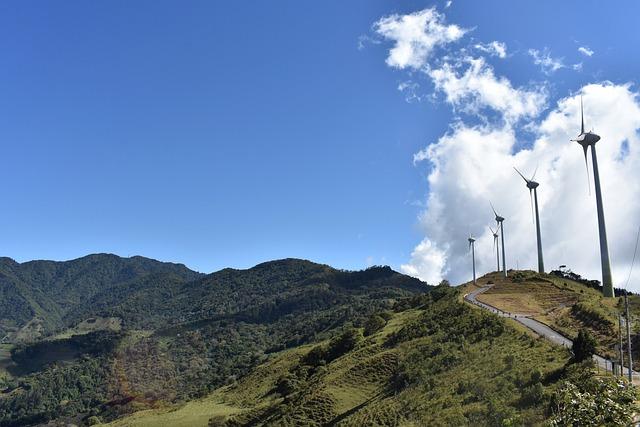
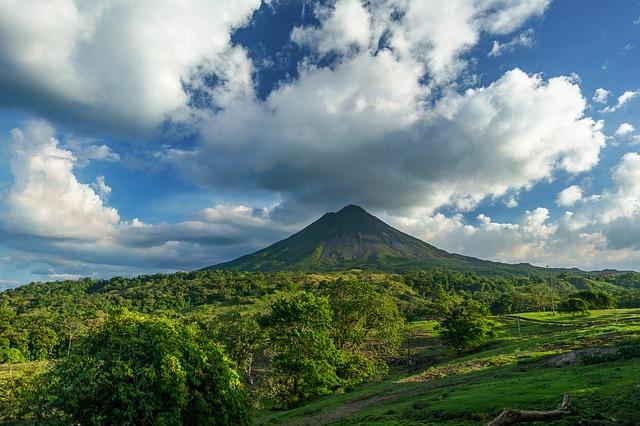
Costa Rica isn’t large, but it boasts incredibly beautiful nature. Mountains, beaches, volcanoes, lakes, national parks, a rich variety of flora and fauna.
While Costa Rica is a tropical country, its climate varies significantly by elevation and region.
The Central Valley (where San José is located and where about half the population lives) enjoys a temperate eternal spring climate with average high temperatures around 70-80 F (21-27 C).
Extreme heat and high humidity are primarily confined to coastal areas.
The economy used to heavily rely on agriculture, but has long since expanded into sectors like finance, ecotourism and corporate service for foreign companies.
0% taxes on international income is certainly an attractive feature of this country, as are the Costa Rican Free Trade Zones with investment and tax incentives.
The Costa Rican economy has been stable with only moderate inflation, although over the last few years its growth has slowed down – which isn’t really surprising, considering this happened in nearly every country in the world.
In Central America, Costa Rica has one of the highest standards of living (I know, that doesn’t mean much, but still), with affordable and high-quality health care, affordable housing, high levels of education, and so on.
English is rather widely spoken and Costa Rica scores “High Proficiency” in the EF English Proficiency Index, often placing among the top 3 countries in Latin America alongside Argentina and Honduras.
However, as with most other Latin American nations, I’d suggest that learning Spanish is probably a good idea if you want to move there.
In general, Costa Rica gets along well with most other nations, although it has a long-term disagreement with neighbor Nicaragua.
Moving to Costa Rica should be possible for almost every man or woman who’d like to escape the West.
The visa system is pretty relaxed, and you most likely won’t even need to apply for a visa.
Costa Rica recently updated its tourist entry laws. For visa-exempt passport holders (such as citizens of the US, Canada, EU, and UK), authorities can issue tourist stays for up to 180 days upon entry.
Extensions within the country are handled on a case-by-case basis through immigration (DGME), rather than a standard automatic 60-day addition.
Apart from that, you can go for Residency as a retired person with $1,000 coming in every month.
Other options are:
In addition, becoming a citizen is possible after 7 years.
Speaking Spanish isn’t a hard requirement, since Costa Rica has a high level of education and a focus on tourism, which means many people speak English to a basis degree, but if you’d like to stay here on a permanent basis and you want to really connect with people: learn their language.
The cost of living in Costa Rica is relatively low, and shouldn’t be a barrier.
The cost of living in Costa Rica is pretty low, and on average a single person can expect to spend $1,500 to $2,100 a month (rent included).
Costa Rica is one of the most expensive countries in Latin America, largely due to steep import taxes on electronics, groceries, and consumer goods.
However, I would advise you to aim for at least double that, to make sure you can afford to live well.
Anyone with several streams of international income should be able to make at least $2,000 a month.
Oh, and any international income you earn is not taxable within Costa Rica, which means you get to keep 100% of it – unless of course you’re a US citizen, which taxes its citizens on worldwide income regardless of where they live. Expatriates must utilize foreign tax exclusions or credits (like the FEIE) to minimize tax liability.
No taxes on international income
Any income you earn from another country is not taxable by Costa Rica
Easy visa system
Moving to Costa Rica isn’t difficult, and staying here is doable for most people. Residency pathways (e.g., Pensionado, Rentista, Inversionista) make long-term legal stays straightforward compared to countries requiring high-net-worth status.
Low cost of living
If you earn at least $2,000 a month, you can live a decent life in Costa Rica. However, I suggest you aim for $3,000 to $4,000
Beautiful nature
Since it borders the Caribbean Sea and the Pacific Ocean, Costa Rica has some absolutely gorgeous beaches. In addition, there are lakes, volcanoes, mountains, rivers, jungles and other protected natural habits
Peaceful country
Costa Rica gets along well with most other nations, and although the crime rates in certain low-income areas are elevated, in general you shouldn’t run into much trouble
High quality of living
This Central American country has one of the highest quality of living standards in the region, and it scores very well in areas such as health care, education and happiness
Decent climate
Costa Rica is sunny and warm
Humid
An average humidity of 77% means you’ll be sweating a lot if you live in the coastal and lowland regions. The Central Valley area, however, has a much more temperate climate.
Active volcanoes
Costa Rica has 100-200 volcanic structures, of which 6 have been active in the last 75 years
Costa Rica can offer expats a great life.
Not only is it relatively easy to move and stay there, the cost of living is low (with 0% taxes on international income) and the quality of life is high.
Combine those factors with beautiful nature, a relatively safe country (with some elevated crime levels in certain areas), a highly educated population and a sunny and warm climate with proximity to great beaches and you’ve got a recipe for truly pleasant living.
Sure, Costa Rica has some problems, but no real big ones. There aren’t any major red flags I can find which would make me avoid this country.
It really looks like a great option, and if you want to escape the West or just set up your Bases there, I would fully recommend Costa Rica.
One of the best options in the area, hands down.
SafetyWing

 ByStephen
Laos a socialist country in Southeast Asia with a rapidly growing economy. Moving to Laos has some definite advantages.
 ByStephen
Bolivia is a surprisingly awesome Latin American country with many advantages. Want to escape the West? Give Bolivia a go!
 ByStephen
Sex tourism in Asia means traveling here with the express intent to have sex with as many women or men as possible.
 ByStephen
What do you need to move to another country? You do not need to be rich. All you need to do is meet one requirement.
 ByStephen
Moving to Honduras isn’t high on most people’s list of where to go when escaping but West … let’s find out why!
 ByStephen
The best secondary cities in Southeast Asia often offer lower living costs, less congestion, and a more relaxed pace than major capitals.